
3 to 5 June 2026, at Singapore Oceanarium
Registration is now closed
The 5th Asian Marine Mammal Stranding Network Symposium & Workshop is proudly co-hosted by Resorts World Sentosa and Thai Coral Reef and Marine Life Conservation Foundation, and held from 3–5 June 2026 at Singapore Oceanarium, Resorts World Sentosa.
This in-person regional gathering will bring together marine mammal scientists, veterinarians, conservation practitioners, aquarium professionals, policymakers, and first responders to strengthen collaboration and knowledge-sharing across Asia. Anchored by the theme “Interfacing In-situ and Ex-situ Marine Mammal Conservation Efforts in Asia,” the symposium–workshop will highlight how field-based conservation, stranding response, rehabilitation, and managed care can work synergistically to improve outcomes for marine mammals.
The programme will feature plenary talks, hands-on workshops, and scientific discussions covering a wide range of timely topics, including collaborative efforts between the aquarium industry and conservation organisations, the role of marine mammal conservation within the One Health agenda, dugong rescue and rehabilitation, and the current status and challenges of marine mammal stranding response networks across different parts of Asia, among others. Through dialogue, capacity building, and cross-sector partnerships, the event aims to strengthen regional preparedness and advance coordinated conservation action for marine mammals in Asia.
Programmes & Hands-on Workshops
Please note that the workshops are on first-come-first-serve basis. To register for the workshops, please sign up at the Registration Table upon arrival to the event.
This hands-on workshop aims to strengthen participants’ confidence, preparedness, and coordination for effective marine mammal stranding response in real-world settings. In this workshop, participants are provided with practical training in marine mammal stranding response through a realistic, simulated beach scenario conducted in a pool with controllable wave conditions. Designed to mirror operational challenges during actual strandings, the 1.5-hour session emphasises teamwork, responder safety, and animal welfare under the guidance of experienced instructors and proctors, with rescue divers on duty throughout.
Through scenario based activities, participants will learn to:
- Apply appropriate techniques to stabilise stranded marine mammals and maintain their condition during response operations
- Monitor, assess, and accurately record vital signs to support clinical decision making
- Demonstrate the correct use of stretchers and stranding response equipment to ensure animal and responder safety
- Safely move and reposition animals while minimising stress and risk of injury
- Implement effective crowd control and on site coordination to support orderly and safe response efforts
- Complete accurate documentation and incident reporting in accordance with stranding response protocols
- Coordinate and execute the safe release of animals back to the sea following response and assessment procedures
Duration: 2 hours
Maximum participants: 50 (5 groups of 10)
Participant group-to-instructor ratio is 1: 2
NOTE: You will get wet! Please be in your swim attire and bring along dry clothes to change after the session.
This workshop is designed to build participants’ practical understanding and technical skills in laboratory diagnostics relevant to stranding response. Laboratory diagnostics are essential for supporting findings from physical examinations during marine mammal stranding events. They play a key role in guiding medical decision-making that influences animal disposition and in contributing high-quality data to marine mammal medicine and the broader One Health framework.
Through a combination of video presentations, lectures, live demonstrations using trained animals, and hands-on exercises, participants will gain exposure to best practices in specimen collection, handling, processing, and interpretation. The session will also include facilitated discussions to reinforce learning and encourage critical evaluation of diagnostic results.
By the end of the workshop, participants will be able to:
- Understand the role of laboratory diagnostics in clinical decision-making during stranding response
- Apply appropriate techniques for collecting biological specimens from marine mammals
- Demonstrate basic specimen processing methods for clinical laboratory use, including cytology preparation and blood smear techniques
- Recognise significant versus non-significant laboratory findings in a clinical context
- Identify common sources of error in specimen collection, handling, and processing and understand their implications
Duration: 1 hour
Maximum participants: 25
Oral hydration is a critical emergency intervention in the management of stranded dolphins and other cetaceans, particularly in cases involving dehydration, compromised thermoregulation, or prolonged stranding. Proper execution of hydration procedures requires sound clinical judgment, correct technique, and coordinated team effort to ensure animal welfare and procedural safety.
This workshop focuses on the principles, indications, and practical considerations of oral hydration in dolphins. It integrates lectures and video presentations covering preparation, equipment selection, tube placement, fluid administration, and risk management, with hands on practice where resources permit. The session is designed to strengthen participants’ capacity to perform safe and effective hydration as part of marine mammal stranding response operations.
By the end of the workshop, participants will be able to:
- Understand the role of oral hydration in emergency care of stranded dolphins
- Recognise indications and contraindications for initiating oral hydration
- Identify appropriate equipment, fluids, and preparation required for hydration procedures
- Apply correct techniques for the safe insertion and handling of oral hydration tubes
- Understand potential risks, limitations, and complications associated with oral hydration
- Implement safety and welfare considerations during hydration interventions
Duration: 1 hour
Maximum participants: 25
Assigning marine mammals to biologically meaningful age classes is essential for ecological research and population fitness modelling, yet commonly used methods such as tooth layer annulation and cellular ageing techniques are either invasive or require specialised technology. This workshop introduces a recently validated, minimally invasive radiographic approach for age estimation in the Common Bottlenose Dolphin (Tursiops truncatus), developed using individuals of known age born under human care. The method applies a scoring system based on ossification centres of the pectoral fin, visible on radiographs, and enables age estimation later into the animal’s life by accounting for ageing related pathologies.
The session will be delivered in a classroom-style format, beginning with an overview of the scientific basis and application of the method, followed by a guided practical exercise in which participants assess pectoral fin radiographs and apply the scoring system to generate age estimates.
By the end of the workshop, participants will be able to:
- Understand the importance of age classification in marine mammal ecology and population modelling
- Compare traditional age-determination methods with radiographic ossification-based approaches
- Recognise key ossification centres of the pectoral fin relevant to age estimation
- Apply a standardised scoring system to radiographs to estimate age in Tursiops truncatus
- Interpret age estimates in the context of life-history stage and ageing-associated pathologies
- Appreciate the advantages and limitations of radiographic age estimation as a non-invasive tool
Duration: 1 hour
Maximum participants: 25
Rapid PCR-based pathogen detection enables fast, field-adjacent identification of target pathogens, with this session focusing on Toxoplasma detection relevant to marine mammal health and One Health surveillance. The workshop combines a concise lecture on the principles and practice of rapid PCR workflows with a guided hands-on exercise for selected participants. Developed by Professor Jack Yang Wei-Cheng, the featured platform emphasizes portability, simplicity, and cost-effectiveness, making it suitable for resource-limited and mobile response settings.
By the end of the workshop, participants will be able to:
- Understand the principles of rapid PCR and its application to Toxoplasma detection in marine mammal and environmental health contexts
- Identify key workflow steps (i.e., sample collection/prep, amplification, detection, and result interpretation) and recognise critical control points
- Apply best practices for contamination control, including use of controls and basic biosafety considerations in field or near-field settings
- Interpret PCR outputs (e.g., amplification curves/endpoint results) to differentiate positive, negative, and inconclusive findings
- Evaluate the advantages and limitations of a portable, simple, and affordable PCR system for rapid decision-making during investigations and response
- Perform basic setup and operation of the portable PCR system, including reagent handling and device workflow under supervision
Duration: 1 hour
Maximum participants: 25
The interconnectedness of human, animal, and ecosystem health lies at the heart of the One Health concept. Marine mammals, due to their longevity, trophic position, and wide geographic range, serve as valuable sentinels of marine ecosystem health. Stranded individuals, in particular, provide critical insights into the presence and impacts of infectious diseases, toxins, and environmental contaminants, offering a unique window into broader ocean health trends.
This workshop will focus on the theoretical foundations and guiding principles of One Health as they relate to the marine environment, with an emphasis on research findings derived from marine mammal studies. Delivered primarily through lectures and panel discussions, the session will encourage interdisciplinary perspectives and dialogue on how marine mammal data can inform ecosystem management, public health, and conservation decision making.
By the end of the workshop, participants will be able to:
- Understand the core principles of the One Health framework and their relevance to marine ecosystems
- Recognise the role of marine mammals as sentinels of ocean and ecosystem health
- Identify how data from stranded marine mammals contribute to understanding infectious diseases, toxins, and contaminants
- Interpret marine mammal health findings within a broader ecological and public health context
- Appreciate the value of interdisciplinary collaboration among conservation, veterinary, environmental, and public health sectors
- Engage critically with current research and case studies linking marine mammal health to One Health outcomes
Duration: 2 hours
Maximum participants: 50
Dugongs (Dugong dugon) (IUCN Red List: Vulnerable) are keystone marine herbivores that contribute significantly to the health of seagrass ecosystems. Across their range, dugongs face severe threats from anthropogenic activities, particularly entanglement in fishing gear such as gillnets, trawls, and discarded nets, alongside the ongoing degradation of their seagrass habitats. Due to their slow reproductive rates, the death of even a single adult represents a significant risk to population integrity and longer-term survival.
Between 1–3 December 2025, the first Asian workshop on dugong rescue and rehabilitation was held in Pattaya, Thailand. A series of talks and case studies highlighted key challenges: dugongs are highly susceptible to stress, their condition can deteriorate rapidly when restrained (e.g., when entangled) and the successful rehabilitation of neonate calves is particularly complex. In conclusion, the workshop participants recognised that there is an urgent need to design specialised, rapid-response protocols to maximise the survival of stranded or entangled dugongs. The AMMSN workshop aims to build upon the theoretical foundation established in Thailand by developing a best-practice guide for dugong rescue and rehabilitation. The programme includes three key elements:
Ecology & Risk Assessment
This component provides an overview of dugong behaviour and physiology, followed by a discussion on how to develop an appropriate assessment matrix to guide intervention decisions. Both scenarios will be addressed: free-swimming entangled dugongs and stranded individuals on beaches.
Topic: Dugong status, neonate case studies and pathology of stranded dugongs
Protocols and Equipment
This module focuses on practical “cut-and-release” techniques, designed for sirenians. Participants will be introduced to non-pursuit capture methods, proper handling of specialised tools (such as curved knives and hoop nets) and the roles and responsibilities within a response team. Key topics include approach techniques, disentanglement procedures and basic post-release monitoring requirements.
Topic: Dugong rescue and core guideline
Training Resources and Future Capacity Building
The workshop will culminate in the development of a practical training guide, which will include a list of essential training equipment and rescue kit requirements. The training guide is intended to support future workshops that incorporate both theoretical instruction and hands-on, in-water training components.
Topic: Guideline finalisation and future workplan
By integrating biological theory with practical field procedures, this workshop aims to catalyse a series of future workshop that will establish a network of skilled first responders, capable of acting decisively so that dugongs in distress have an improved chance of survival.
Duration: 3 hours
Maximum participants: 100
Ultrasound Applications for Aquatic Mammal Stranding Response
Led by experts from the National Marine Mammal Foundation (NMMF), this immersive workshop will introduce participants to the practical application of ultrasonography in cetaceans across managed care, stranding response, and conservation settings. NMMF operates on the front lines of extinction through its global initiative, Operation GRACE (Global Rescue of At-Risk Cetaceans and Ecosystems). As leaders in conservation medicine, our team applies clinical diagnostics, including ultrasound, to field-based responses and conservation projects that support endangered and at-risk dolphin populations worldwide. We specialize in translating tools refined in managed care into practical, field-ready applications that strengthen veterinary capacity globally. This workshop reflects that translational approach.
1-Hour Theoretical Session
Participants will receive a focused overview of:
- Basic ultrasound physics
- Equipment selection and practical recommendations
- Standardized scanning protocols in small cetaceans for non-veterinarians, with a focus on reproductive and pulmonary assessment during stranding response
- Applications during live-animal response and rapid health assessments to aid in decision making
- Global strategies for real-time specialist support with interpretation and case consultation
- Integrating ultrasonography into broader conservation medicine and One Health frameworks
The session emphasizes how imaging data informs clinical decision-making, welfare evaluation, and population-level conservation strategies.
1-Hour Practical Component
Participants will engage in hands-on practice, including:
- Basic probe handling and positioning techniques
- Live demonstration by experienced ultrasonographers
- Image acquisition strategies
By strengthening diagnostic capacity and fostering cross-regional collaboration, this workshop contributes to a growing international veterinary network committed to advancing small cetacean health through science, partnership, and compassion.
- Keynote Speakers
- Facilitators
Meet the Keynote Speakers

Prof. Lemnuel V. Aragones
Professor Lemnuel V. Aragones is a full Professor at the Institute of Environmental Science & Meteorology (IESM), University of the Philippines, Diliman, Quezon City. His main field of interest is environmental science particularly the conservation and management of marine mammals (i.e., dolphins, whales, and dugongs), including other large marine vertebrates (e.g., sea turtles, sharks, and rays) and their habitats. He received his PhD from James Cook University in 1998. In 2001, Lem received the Outstanding Young Scientist Award from the National Academy of Science & Technology. Lem is a member of the IUCN’s Species Survival Commission - Sirenian Specialist Group and is the Head/ Principal Investigator of the Marine Mammal Research and Conservation Laboratory at UP IESM. In addition, Lem is the President of the Asian Marine Mammal Stranding Network (AMMSN), and the President of the Philippine Marine Mammal Stranding Network (PMMSN) since their inception.
Website: https://iesm.science.upd.edu.ph/lva/

Grant Abel
Grant Abel has actively served on the steering committee of the Asian Marine Mammal Stranding Network since 2012. He joined Singapore Oceanarium at Resorts World Sentosa in May 2025 as Assistant Vice President, Life Sciences. He brings more than 45 years of global aquarium development and operational leadership experience, having worked extensively across New Zealand, Australia, Taiwan, Hong Kong SAR of China, Japan, the United States, and Singapore. He is an Accreditation Inspector for the Association of Zoos and Aquariums and a member of the Aquarium Committee of the World Association of Zoos and Aquariums. His career includes senior leadership roles such as Vice President for Life Sciences at Seattle Aquarium, General Curator and Director of Animal Care at Ocean Park Hong Kong, and Curator of Marine Mammals at the Shimonoseki Marine Science Museum in Japan.
Current leadership roles in marine conservation include serves as Co-Chair of the Integrated Conservation Planning for Cetaceans (ICPC) under the IUCN SSC Cetacean Specialist Group, and as Chair of the Supervisory Board for the Consortium for the Conservation of the Atlantic Humpback Dolphin. He has also contributed to several international initiatives, including service on the Steering Committee of the Stegostoma tigrinum Augmentation & Recovery (StAR) Project and as Coordinator for Shark Ray 360, both involving global consortiums of aquariums advancing the conservation and recovery of Indo Pacific leopard sharks (Stegostoma tigrinum) and bowmouth guitarfish (Rhina ancylostomus) across their natural ranges. In addition, Grant served as an Advisor to the 2017 VaquitaCPR emergency response, a multinational effort aimed at preventing the extinction of the vaquita porpoise (Phocoena sinus), the world’s most endangered small cetacean found only in Mexico’s Upper Gulf of California.

Dr Paige Elise Stevens Sanchez
Dr. Paige Elise Stevens-Sanchez is a Research Scientist at Georgia Aquarium whose work examines how human activities, particularly anthropogenic noise, affect marine mammals. Dr. Stevens-Sanchez earned her Ph.D. in Integrative Biology from Oklahoma State University, where she collaborated with numerous dolphinarium facilities to investigate the effects of anthropogenic noise on multiple aspects of cetacean cognition, including attention, learning and memory, and communication. Her current research integrates animal welfare, bioacoustics, and passive health monitoring to support marine conservation initiatives, with a particular focus on populations experiencing increasing human presence along the Mid-Atlantic coast.
In addition to her role at Georgia Aquarium, Dr. Stevens-Sanchez is an active board member of the Marine Mammal Research Network (MMRN), an organization dedicated to fostering collaboration between scientists and animal care facilities. She has held educational and research roles across zoological and academic institutions, experiences that shaped her commitment to advocating for ocean conservation across diverse audiences. She is deeply passionate about making science accessible, advancing animal welfare standards, and inspiring meaningful connections between people, marine life, and ocean conservation.

Dr Forrest Gomez
Dr. Forrest Gomez is the Director of Conservation Medicine at the National Marine Mammal Foundation (NMMF), where she leads global initiatives to advance marine mammal health and conservation. With over 20 years of professional experience, Dr. Gomez has dedicated her career to addressing complex challenges facing marine ecosystems and endangered species. Her work spans critical conservation initiatives, including emergency rescue efforts for the critically endangered vaquita porpoise, as well as long-term research on the impacts of environmental disasters such as the Deepwater Horizon oil spill on bottlenose dolphin populations. Her expertise spans marine mammal conservation, clinical and field veterinary medicine, and applied research, including major contributions to species recovery efforts and long-term studies on environmental impacts affecting dolphin populations. She has also played a key role in advancing diagnostic and monitoring techniques—particularly ultrasonography and other clinical tools—to assess health, reproduction, and physiology in marine mammals, strengthening evidence-based conservation strategies. Dr. Gomez is co-founder of Operation GRACE (Global Rescue of At-Risk Cetaceans and Ecosystems), a pioneering initiative that applies conservation medicine to safeguard threatened dolphins, whales, and porpoises worldwide. She has led and supported international efforts to strengthen veterinary expertise and conservation practices, including training programs and field support for endangered species such as the Indus River dolphin.
Meet the Workshop Facilitators
Carlos Ulises Camarena Hermosillo
Carlos is a marine mammal professional with over 25 years of experience in animal care, training, and operational leadership. He is currently Senior Manager of the Marine Mammal Habitat at Singapore Oceanarium, Resorts World Sentosa. His expertise includes husbandry and medical training, enrichment, animal transport, and emergency response planning. Carlos previously served as the Vice President of ADEMM (Asociacion Mexicana de Especialistas de Mamiferos Marinos) and was responsible for the Central Area of the Quintana Roo Stranding Network (RVQ) and has contributed to marine mammal research and professional development programmes in collaboration with Texas A&M University and Cornell University.
Jerson Sabino Vitug
Jerson is a marine mammal training professional with over 20 years of experience specialising in dolphin and sea lion behavioural management. His expertise centers on behavioural maintenance, training programme development, and the delivery of high-quality animal presentations and interactive programmes. He also applies training principles to support veterinary procedures, nutrition management, and overall animal welfare.
Jerson currently serves as a Manager of Marine Mammals at the Marine Mammal Habitat at Singapore Oceanarium, Resorts World Sentosa. He has previously held senior training and animal care roles at Subic Bay Marine Exploratorium in the Philippines and Singapore Zoo. In addition, he is an active first responder with the Philippine Marine Mammal Stranding Network, contributing practical training based support to marine mammal welfare and rescue operations.
Prof. Lemnuel V. Aragones
Professor Lemnuel is a full Professor at the Institute of Environmental Science & Meteorology (IESM), University of the Philippines, Diliman, Quezon City. His main field of interest is environmental science particularly the conservation and management of marine mammals (i.e., dolphins, whales, and dugongs), including other large marine vertebrates (e.g., sea turtles, sharks, and rays) and their habitats. He received his PhD from James Cook University in 1998. In 2001, Lem received the Outstanding Young Scientist Award from the National Academy of Science & Technology. Lem is a member of the IUCN’s Species Survival Commission - Sirenian Specialist Group and is the Head/ Principal Investigator of the Marine Mammal Research and Conservation Laboratory at UP IESM. In addition, Lem is the President of the Asian Marine Mammal Stranding Network (AMMSN), and the President of the Philippine Marine Mammal Stranding Network (PMMSN) since their inception.
Website: https://iesm.science.upd.edu.ph/lva/
Red Aian Noguera Caragdag
Red is a marine animal health diagnostics professional specialising in clinical laboratory techniques for marine mammals. He currently serves as an Assistant Manager of the Clinical Diagnostic Laboratory under Marine Mammals and Veterinary Care at Singapore Oceanarium, Resorts World Sentosa. where he conducts and interprets diagnostic tests including hematology, clinical chemistry, cytology, and microbiology to support veterinary decision‑making for dolphins and other marine species. His work also encompasses laboratory quality control, disease surveillance, and environmental health testing, strengthening preventive and clinical care programmes through data‑driven diagnostics.
Dr. Christopher Torno
Dr Christopher is a marine mammal veterinarian and former faculty member of the Institute of Biological Sciences at the University of the Philippines Los Baños and the Aquatic Animal Health Program at the University of Florida’s College of Veterinary Medicine. He started his professional career on non-domestic species with birds of prey (notably the endangered Philippine Eagle) and different species of terrestrial rainforest animals before finally moving with aquatic species where he became the first marine mammal veterinarian in the Philippines. Dr Christopher has extensive experience in marine mammal health, clinical care, and conservation related veterinary programmes. He currently serves as Assistant Director of the Marine Mammals and Veterinary Care Department at the Singapore Oceanarium, where he oversees marine mammal veterinary operations. Trained as a veterinarian, he brings a strong biologist’s perspective to marine mammal science and care.
Dr. Alfonso Lopez Aguilar
Dr. Alfonso Lopez is a veterinarian with over 20 years of specialised experience in marine mammal medicine, clinical care, and health programme development within large-scale marine facilities. He currently serves as Senior Director of Marine Mammals and Veterinary Care at Singapore Oceanarium, Resorts World Sentosa, where he oversees comprehensive marine mammal health programmes encompassing preventive medicine, diagnostics, pathology, and clinical case management. Dr. Alfonso Lopez has played a central role in establishing and advancing marine mammal veterinary services at major international institutions, including Dolphin Bay and The Lost Chambers at Atlantis Dubai. His clinical expertise includes marine mammal health assessment, veterinary infrastructure development, and the application of evidence based medical and welfare standards in managed care settings.
Dr. Leo Jonathan Suarez
Dr. Leo Suarez is a marine mammal veterinarian with nearly two decades of experience in marine mammal clinical care, stranding response, and disease investigation in the Philippines. He has worked with marine mammals since 2007, initially focusing on rehabilitation and necropsy of stranded dolphins, and later expanding into comprehensive veterinary care for marine mammals in professional settings.
Dr. Leo Suarez is actively involved with the Philippine Marine Mammal Stranding Network (PMMSN), where he serves in a leadership and technical capacity, contributing to national stranding response, post-mortem examinations, and veterinary training programmes. He is a published author on marine mammal disease, including the first documented case of cetacean morbillivirus in the Philippines, highlighting his decades-long experiences in cetacean stranding response.
Dr. Thanida Haetrakul
Dr. Thanida Haetrakul is a veterinary specialist in aquatic and marine mammal medicine, with a strong focus on disease diagnosis, health assessment, and rescue‑related clinical care. She is an Instructor in the Department of Veterinary Medicine and Deputy Director of the Veterinary Medical Aquatic Animal Center of Excellence at Chulalongkorn University, Thailand, where she supports advanced veterinary services for marine and aquatic species. Dr. Thanida Haetrakul holds a DVM, Master’s degree, and PhD in Veterinary Medicine (Aquatic Animal Health) from Chulalongkorn University. Her expertise includes marine mammal rescue and medicine, clinical pathology, infectious disease diagnostics, and health monitoring across fish, chelonians, and marine mammals. She has contributed to peer‑reviewed research on marine mammal disease, pathology, and reproductive health, including studies on cetacean neoplasia, dolphin reproductive biology, and health impacts of environmental stressors. Dr. Thanida Haetrakul is also actively involved in regional marine wildlife response and collaborative research programmes advancing evidence based veterinary diagnostics and aquatic animal health management.
Dr. Marie Christine M. Obusan
Dr. Marie Christine M. Obusan is a marine mammal health and environmental microbiology specialist whose work focuses on disease diagnostics, pathogen surveillance, and health assessment of stranded cetaceans. She is an Associate Professor at the Institute of Biology, College of Science, University of the Philippines Diliman, and leads research at the Microbial Ecology of Terrestrial and Aquatic Systems (METAS) Laboratory, integrating microbiology, pathology, and One Health approaches. Dr. Christine Obusan has made significant contributions to marine mammal stranding investigations in the Philippines, with peer reviewed studies on bacteriology, histopathology, antimicrobial resistance, and zoonotic pathogens in stranded dolphins and whales, providing critical insights into ocean and public health. Her recent work includes the development of molecular diagnostic tools for cetacean morbillivirus surveillance, strengthening regional and global marine mammal health monitoring efforts. Actively involved with national stranding response efforts, Dr. Christine Obusan applies evidence based diagnostics to support marine mammal conservation, disease preparedness, and One Health capacity building in Southeast Asia.
Dr. Jack Yang Wei-Cheng
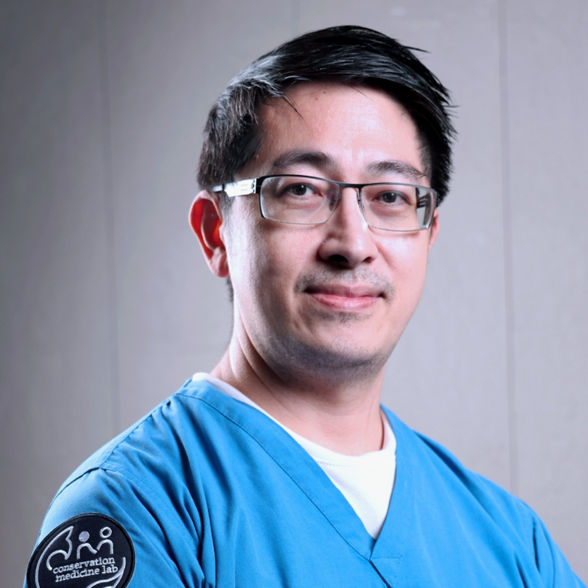
Dr. Jack Yang Wei Cheng is a veterinary scientist and marine mammal conservation medicine specialist with internationally recognised expertise in cetacean health diagnostics and disease investigation. He is a Professor at the School of Veterinary Medicine, National Taiwan University, where he leads the Conservation Medicine Laboratory, focusing on pathogen surveillance, stress physiology, and diagnostic tool development for whales and dolphins. Dr. Jack Yang has played a leading role in advancing molecular and field deployable diagnostic technologies for marine mammals, including portable assays for cetacean morbillivirus, Toxoplasma gondii, and immune response profiling, supporting rapid health assessment during stranding events and unusual mortality investigations. His work integrates pathology, molecular diagnostics, and environmental stress analysis to inform evidence based conservation and management of cetacean populations across the western Pacific and beyond.
Dr. Lindsay Porter, OBE
Dr Lindsay Porter, OBE is a marine mammal specialist who has spent much of her career investigating the role marine mammals play in maintaining healthy marine ecosystems. Her research focuses on vulnerable species, particularly coastal species such as the Indo-Pacific humpback dolphin and dugongs. Lindsay is a founding member of the Asian Marine Mammal Stranding Network and is a member of the International Whaling Commission's Strandings Expert Panel. Lindsay has expertise in marine mammal stranding programmes, establishing frameworks for rescue, rehabilitation and scientific investigation that support both animal welfare and critical data collection.
Originally from Scotland, where she still collaborates on projects monitoring the impacts of climate change on small cetaceans, Lindsay has been based in Asia for the last three decades. There she conducts primary research and contributes to regional marine management action plans. Lindsay's ongoing research focuses on the Indo-Pacific humpback dolphin and the finless porpoise populations of the Greater Bay Area and South China Sea.
As the current Chair of the Scientific Committee of the International Whaling Commission, Lindsay bridges science and policy, playing a critical role in translating research findings into effective marine governance.
Professor Dr. Nantarika Chansue
Professor Dr. Nantarika Chansue is a distinguished veterinarian, scientist, and academic specialising in aquatic animal medicine and veterinary forensic science at Faculty of Veterinary Science, Chulalongkorn University, Bangkok. With multiple doctoral degrees and an international reputation in her field, she has made significant contributions to aquatic animal medicine, animal welfare, veterinary forensic science, and marine endangered species rescue and conservation.
Dr. Chansue serves as a leading educator and mentor, developing advanced training programmes and professional lectures for veterinarians, particularly within Thailand’s governmental agencies and academic section. Her work integrates science, law, and welfare, advancing standards in aquatic veterinary medicine across the region. She is also actively involved in marine conservation and regional collaboration, playing a key role as a Steering Committee in the Asian Marine Mammal Stranding Network (AMMSN) and a member of expert panel for International Whaling Commission (IWC), where she supports capacity building, stranding response, and knowledge exchange across countries. At present, she is also the President of Earth Agenda Foundation, President of the Thai Aquatic Veterinary Association, and the Chairperson for Academic Sub-Committee of Thai Princess Sirivannavari Coral Reef and Marine life Conservation Foundation.
Dr. Elsburgh “Tres” Clarke
Dr. Tres Clarke is a zoological veterinarian and marine mammal health specialist currently serving as Director of Animal Health and Welfare at SeaWorld Abu Dhabi and the Yas SeaWorld Research & Rescue Center in the United Arab Emirates. He works extensively with marine mammals and other aquatic species in clinical care, welfare, and is actively engaged in international conservation. Dr Clarke serves as a member of the IUCN Species Survival Commission and contributes to global conservation dialogue through participation in IUCN World Conservation Congress forums. He is also a member of the International Whaling Commission (IWC) Strandings Expert Panel, supporting marine mammal rescue, response, and rehabilitation efforts worldwide.
Assistant Professor Dr. Watcharapol Suyapoh
Assistant Professor Dr. Watcharapol Suyapoh (DVM, PhD) is a veterinary pathologist and instructor at the Faculty of Veterinary Science, Prince of Songkla University. His primary research focuses on fish and marine mammal pathology, with particular emphasis on disease pathogenesis.
He obtained his PhD from Khon Kaen University, where his research centered on the pathogenesis of infectious diseases. At Prince of Songkla University, he teaches veterinary pathology across multiple disciplines.
Dr. Suyapoh has published extensively in Scopus-indexed journals (Q1–Q2). His current research is dedicated to investigating causes of mortality in dugongs and other marine mammals, integrating pathology, microbiology, and molecular diagnostics to improve diagnostic accuracy in stranding investigations.
Dr. Paola Unda Marron
Dr. Paola Unda Marron is a veterinarian with over 17 years of international experience, currently working as an emergency and critical care veterianrian. She has extensive experience working with marine mammals in both clinical and rehabilitation settings, with a strong focus on animal welfare, husbandry, and conservation.
Dr Chayanis Daochai
Dr. Chayanis Daochai is a lecturer and researcher in aquatic and marine animal medicine at the Faculty of Veterinary Science, Prince of Songkla University, Thailand. Her work focuses on marine mammal health, with particular emphasis on dugong biology, ecology, and reproduction, as well as stranding response and the clinical management of rare marine species, including elasmobranchs and sea turtles.
She is actively involved in field investigations, rehabilitation, and research integrating veterinary science with conservation practice and outreach education. Dr. Chayanis also contributes to ongoing work at the Dugong Research Station, Prince of Songkla University. Her research interests include dugong mortality, reproductive biology, and habitat-related health assessment, supporting evidence-based conservation and marine wildlife management in Thailand.
Dr Justine Paola Delos Santos
Justine Paola Delos Santos is a veterinarian specializing in animal diagnostics and treatment, with a particular focus on marine mammals. She has also developed expertise working with fish and elasmobranchs during her tenure at Resorts World Sentosa (RWS), where she contributed to advancing veterinary practices in aquatic animal care. Her multidisciplinary experience underscores her commitment to improving health outcomes across diverse marine species.
Accommodations

Hotels within Resorts World Sentosa
Singapore Hotels & Accommodations at Resorts World Sentosa
Download the Hotel Reservation Form and send the completed form directly to groups@rwsentosa.com.

Siloso Beach Resort
Siloso Beach Resort welcomes the 5th AMMSN participants and extends the promotional offer below.
Deluxe Room – Room Only (Promo Code: AMMSN)
1, 2, 3, 4, 7 June: S$225++ (S$269.78 nett) per room per night
5, 6 June: S$270++ (S$323.73 nett) per room per night
The Deluxe Room is 25sqm, with attached bathroom with standing shower, located on Level 5 and above, that can accommodate two persons.
Terms and Conditions apply.

Hotels within Sentosa

Hotels on Mainland Singapore
You may look for hotels located within the following areas: Telok Blangah, Harbourfront, Outram Park, Chinatown
Meet the AMMSN Steering Committee
The 5th AMMSN Symposium & Workshop is co-hosted by


Getting Here
Singapore Oceanarium
24 Sentosa Gateway, Sentosa Island, Singapore 098137
For Enquiry
Ms Sandra Tambou
sandra.tambou@rwsentosa.com