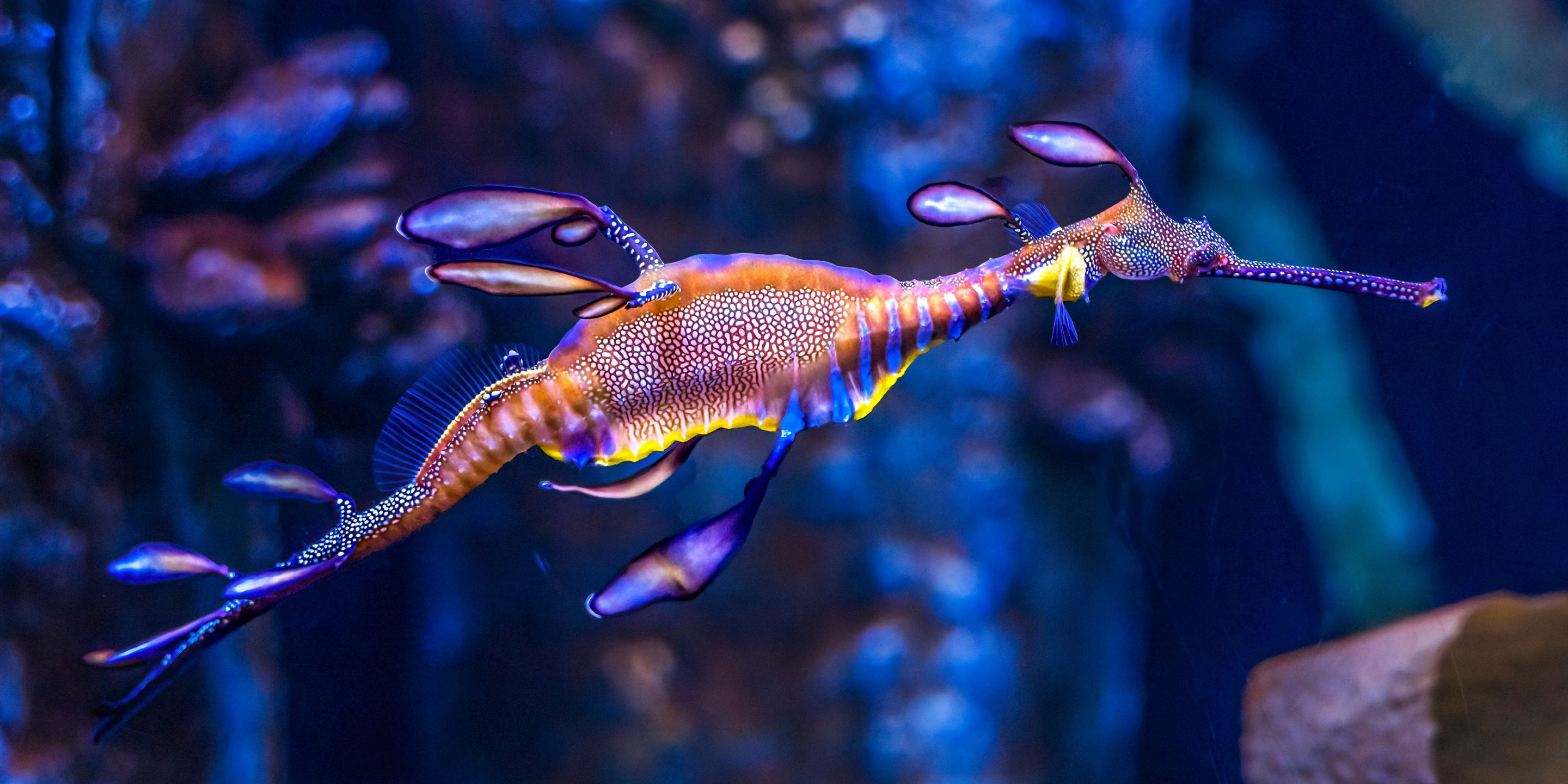


雄性草海龙是称职的父亲,会在尾部下方的育卵区中孵化并哺育约250到300颗受精卵。卵产下后,海龙的皮肤会在每个卵周围形成杯状结构。经过30到38天孵化后,幼鱼依靠卵黄囊维持2-3天,然后开始独立捕猎。
草海龙因身体上的叶状附肢酷似海藻而得名。其鲜艳的伪装色彩有助于融入沿海栖地环境,例如:巨藻森林、海草床和珊瑚礁。
动物种类
硬骨鱼
分布范围
东印度洋
栖息地
沿海水域
食性
甲壳动物,浮游生物
保护现状
未评估
已灭绝
易危
面临高灭绝风险
查看更多
特征
摄食行为
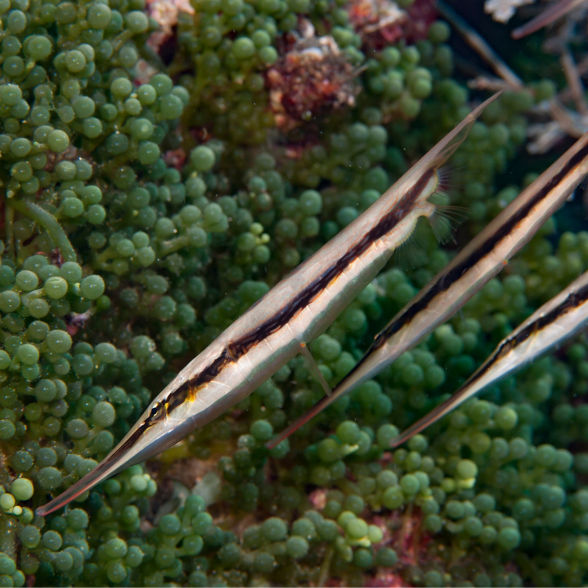
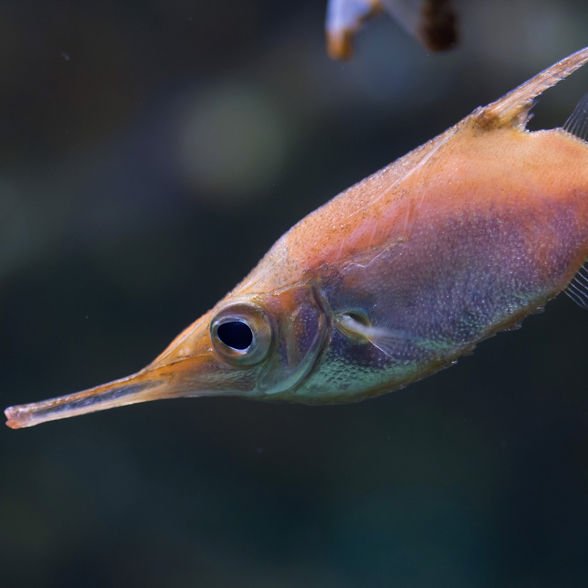
海龙具有无齿的长管状吻部,通过扩张下吻部的关节将猎物整个吸入。它们敏锐的双眼可以独立转动,有助于精准捕食。进食时,借助肌腱的弹性回缩力快速旋转吻部,以惊人的准确度捕捉快速移动的小型猎物。
面临的威胁/保护
草海龙仅分布于澳大利亚海域,该物种受到沿海栖息地持续退化和丧失的影响。由于人类活动,为其提供庇护和保护的海草床和珊瑚礁在质量和分布面积上均呈现下降的趋势,威胁着草海龙的生存。

Feeding behaviour
Seadragons have long, tubular, toothless mouths that can suck up a prey whole by expanding a joint in the lower snout. Their keen eyes can move independently of each other, aiding in precise hunting. Using pivot feeding, they rapidly rotate their snouts with the help of elastic recoil of tendons to catch small, fast-moving prey with remarkable accuracy.

Threats faced/Conservation
Found only around Australia, this species is affected by the ongoing degradation and loss of coastal habitats. Seagrass meadows and coral reefs are declining in both quality and size due to human activities, threatening the survival of Weedy Seadragons that rely on them for shelter and protection.

Characteristics
Male seadragons are dedicated fathers that brood and nourish around 250 to 300 fertilised eggs in a brood patch on the underside of their tails. When these eggs are deposited, the seadragon’s skin forms a cup around each of them. After 30 to 38 days, the eggs hatch, and the young rely on their yolk sacs for two to three days before beginning to hunt independently.
保护现状
未予评估
尚未评估的物种
数据缺乏
数据不足,无法评估
无危
灭绝风险较低
近危
可能成为受威胁物种
易危
面临高灭绝风险
濒危
面临极高灭绝风险
极危
面临极度高灭绝风险
野外灭绝
野外已无分布,仅存于人工环境
灭绝
已彻底灭绝