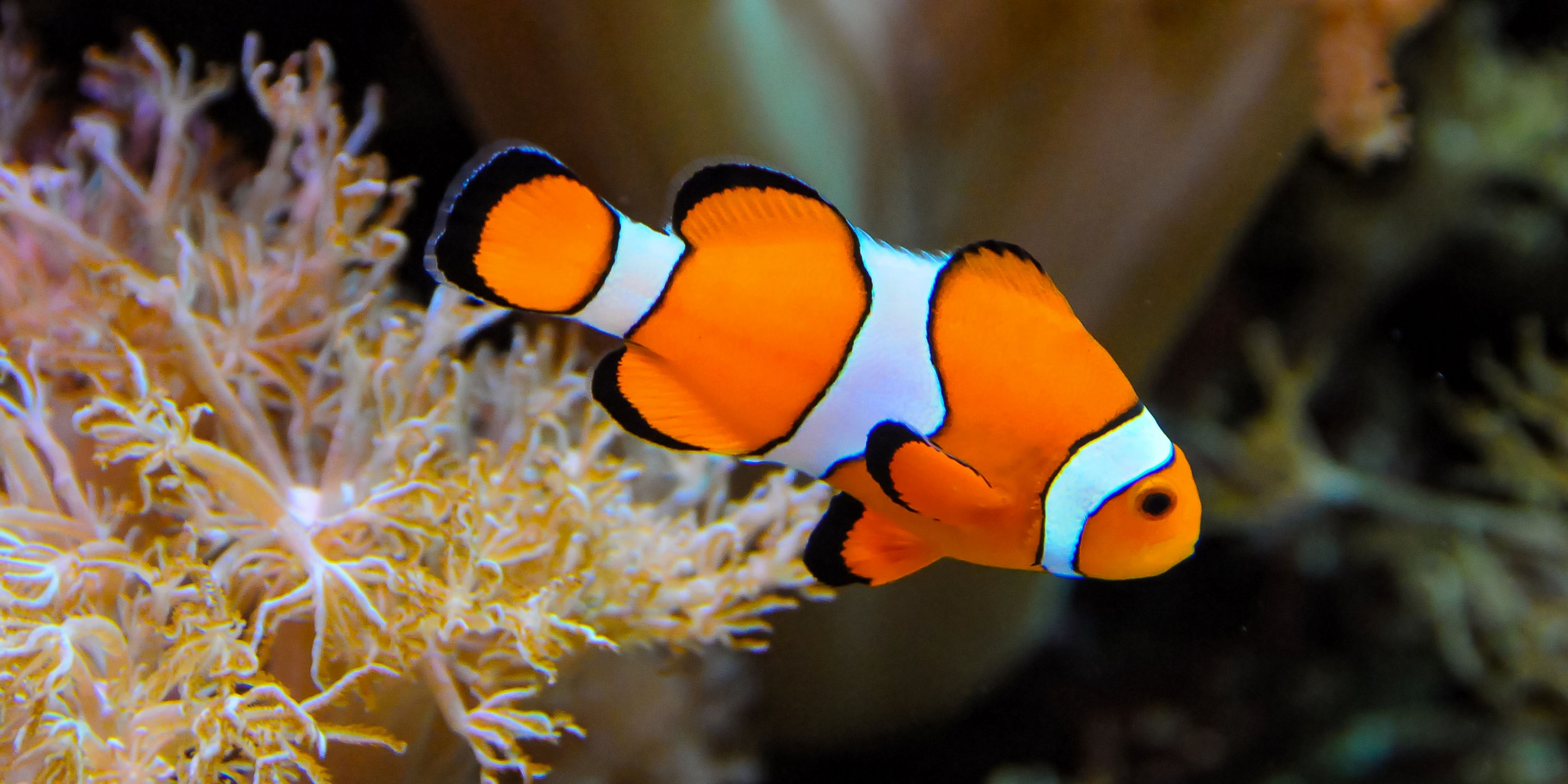


Clown Anemonefish and sea anemones share a close partnership. Anemonefish find shelter and protection from predators by living within the sea anemones. In return, particles stirred up by the fish or waste excreted provides sea anemones with nutrients. A special mucus layer protects anemonefish from sea anemones’ stinging tentacles, allowing them to live safely among the arms of their host.
Clown Anemonefish are notable for their vivid orange or black colours. True to their name, they are known for forming symbiotic relationships with sea anemones.
Animal Type
Bony Fish
Range
Indo-West Pacific
Natural Habitat
Coral Reef
Diet
Plankton
Conservation Status
Not Evaluated
Extinct
Least Concern
At lower risk of extinction
Find out more
Characteristics
Feeding behaviour
The feeding behaviour of Clown Anemonefish is closely tied to their social hierarchy. Smaller, less dominant fish face aggression from larger ones, limiting their access to food. With lesser energy, these smaller fish are unable to travel further to forage for food, restricting their growth. This dynamic helps stabilise their social hierarchy, as it becomes difficult to challenge dominant fish.
Threats faced/Conservation
Often found in shallow reefs, these fish depend on sea anemones for shelter and protection. This close bond makes them vulnerable to habitat loss and degradation caused by human activities in coastal areas where they naturally occur.
You May Also Like
Conservation Status
Not Evaluated
Species yet to be assessed
Data Deficient
Insufficient data for evaluation
Least Concern
At lower risk of extinction
Near Threatened
Likely to become threatened in the near future
Vulnerable
At high risk of extinction
Endangered
At very high risk of extinction
Critically Endangered
At extremely high risk of extinction
Extinct in the Wild
No longer found in the wild, survives only under human care
Extinct
No longer exists