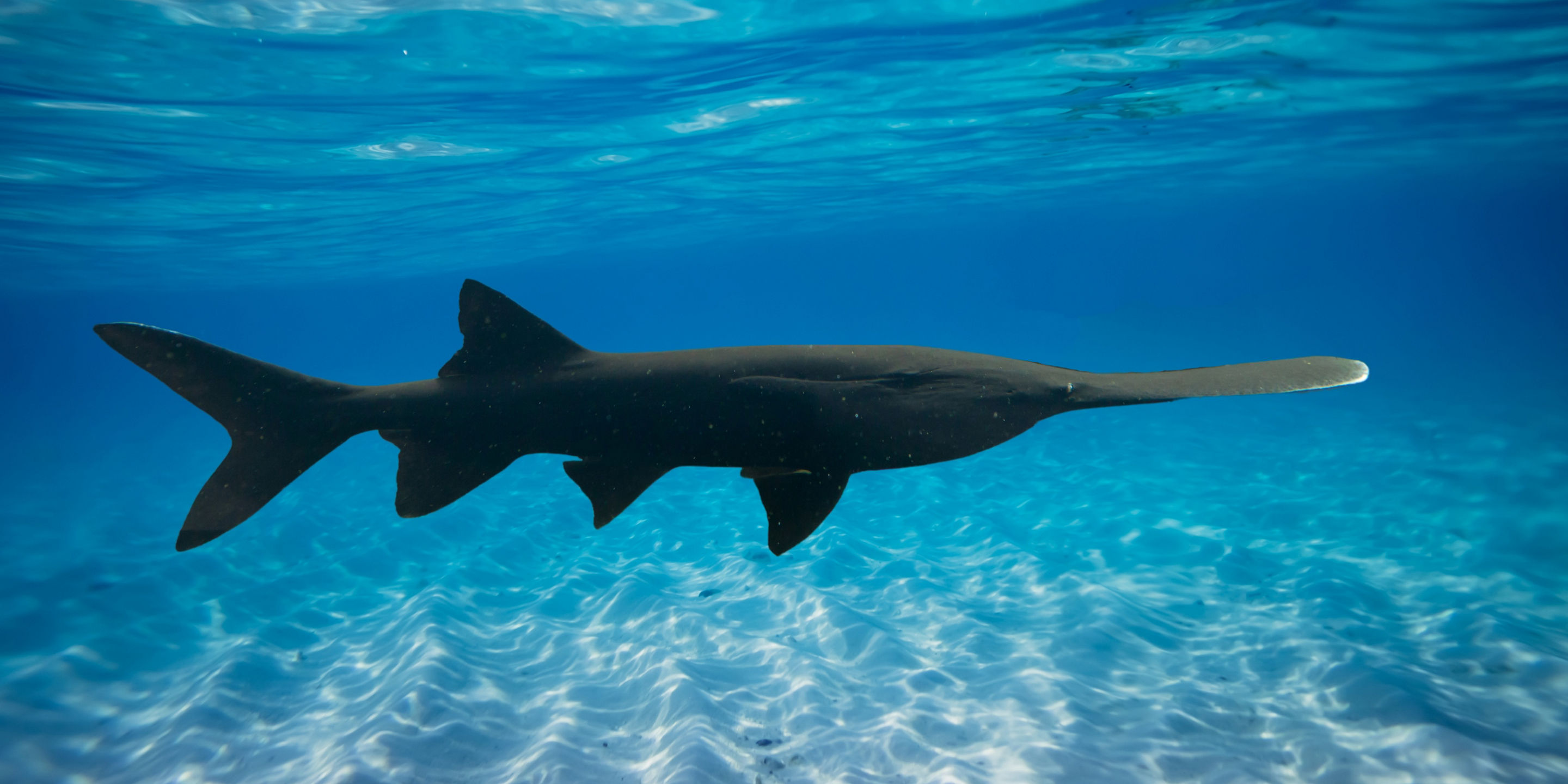


American Paddlefish have a cartilaginous skeleton—the only bones in their body are the jawbones. They also have smooth skin that lacks scales, save for a few on the base of their tail.
With their long, paddle-shaped snout, American Paddlefish are the last surviving species of their kind—making them an important piece of natural history left on Earth.
Animal Type
Bony Fish
Range
North America
Natural Habitat
Freshwater Habitats
Diet
Plankton
Conservation Status
Not Evaluated
Extinct
Vulnerable
At high risk of extinction
Find out more
Characteristics
Feeding behaviour
American Paddlefish are filter feeders that utilise specialised gill rakers to feed on plankton, such as tiny crustaceans and fish larvae. Electroreceptors near the tip of their long snout help them detect prey as they glide through the slow-moving waters of their habitats.
Threats faced/Conservation
The main threat to American Paddlefish comes from dam construction. These fish live in large rivers but swim upstream to spawn. Dams prevent them from reaching their spawning grounds and disrupt this natural behaviour, leading to a sharp decline in successful reproduction.
You May Also Like
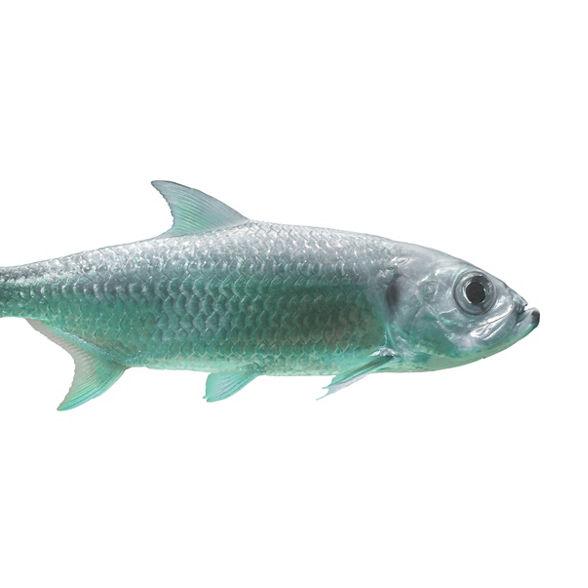
Fish
Indo-Pacific Tarpon
Conservation Status
Not Evaluated
Species yet to be assessed
Data Deficient
Insufficient data for evaluation
Least Concern
At lower risk of extinction
Near Threatened
Likely to become threatened in the near future
Vulnerable
At high risk of extinction
Endangered
At very high risk of extinction
Critically Endangered
At extremely high risk of extinction
Extinct in the Wild
No longer found in the wild, survives only under human care
Extinct
No longer exists