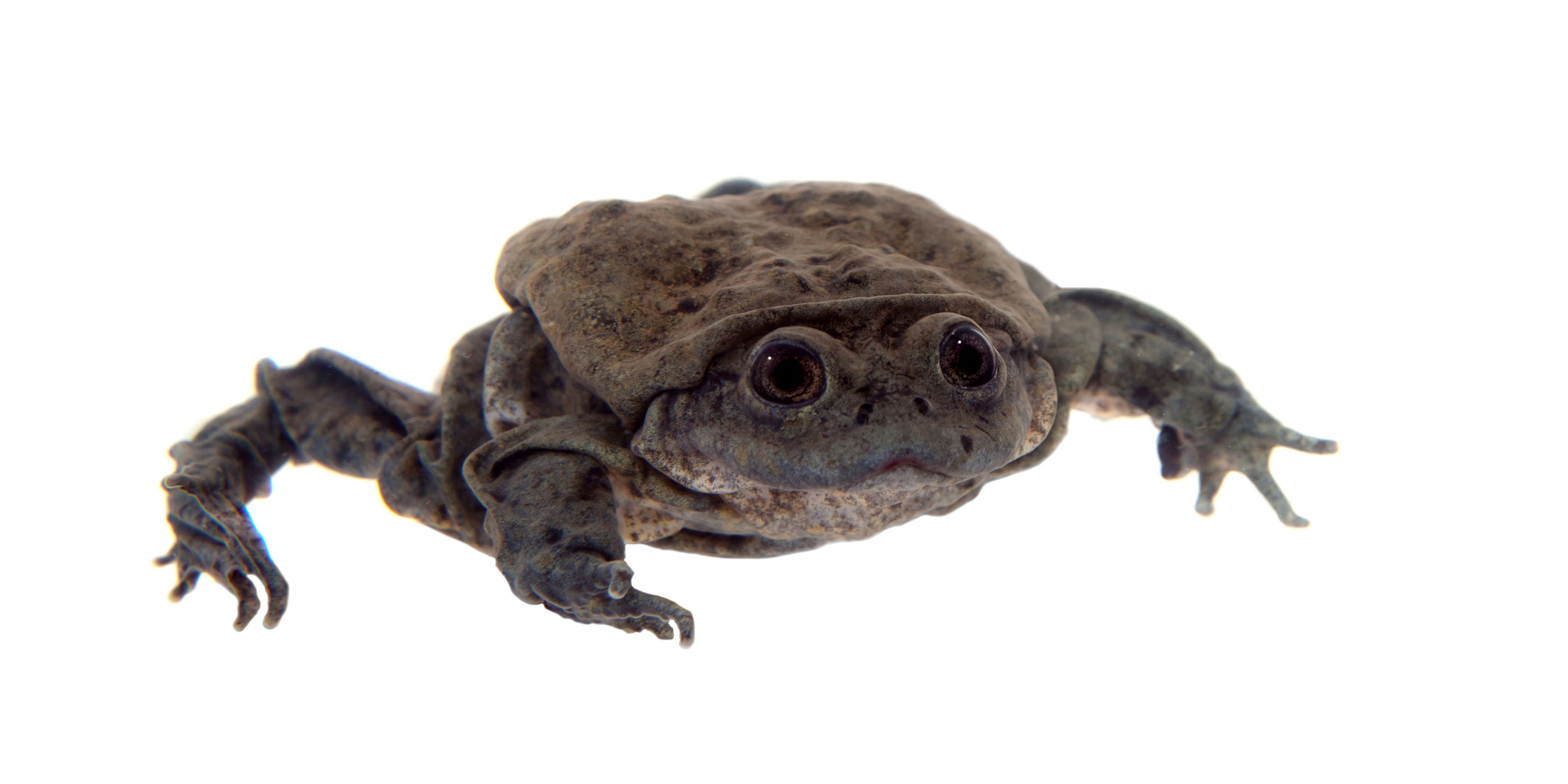


Amphibians and snails are favourites in the Titicaca Water Frog’s diet. Their tongue can extend but is relatively short, therefore they rely on underwater feeding than catching prey that live on land. With the lowest metabolism of any frog species, they are perfectly adapted to hunt and feed in their cold, high-altitude home.
Titicaca Water Frogs are the largest fully aquatic frogs, found at depths of 10 m or more in Lake Titicaca. Juveniles stay in shallow waters, favouring muddy or sandy areas with rocks and vegetation.
Animal Type
Amphibian
Natural Habitat
Freshwater Habitats
Range
South America: Lake Titicaca in the Andes mountain range on the border of Peru and Bolivia
Diet
Crustaceans, gastropods
Conservation Status
Not Evaluated
Extinct
Endangered
At very high risk of extinction
Find out more
Feeding behaviour
Threats faced/Conservation
Titicaca Water Frogs breathe through their skin, so water pollution is a serious threat. Wastewater and other pollutants flowing into the lake have caused mass die-offs linked to low oxygen levels. These frogs also face over-harvesting for consumption as traditional food, and trout introduced to their natural habitats may compete with them for food and prey on their young.
Characteristics
Titicaca Water Frogs are easily recognised for a distinct feature—their large, loose skin folds. They breathe through skin and make use of its increased surface area for efficient gas exchange. When oxygen level is low, they stretch their limbs and bob up and down, absorbing more oxygen as they expose their skins to more water.
You May Also Like
Conservation Status
Not Evaluated
Species yet to be assessed
Data Deficient
Insufficient data for evaluation
Least Concern
At lower risk of extinction
Near Threatened
Likely to become threatened in the near future
Vulnerable
At high risk of extinction
Endangered
At very high risk of extinction
Critically Endangered
At extremely high risk of extinction
Extinct in the Wild
No longer found in the wild, survives only under human care
Extinct
No longer exists