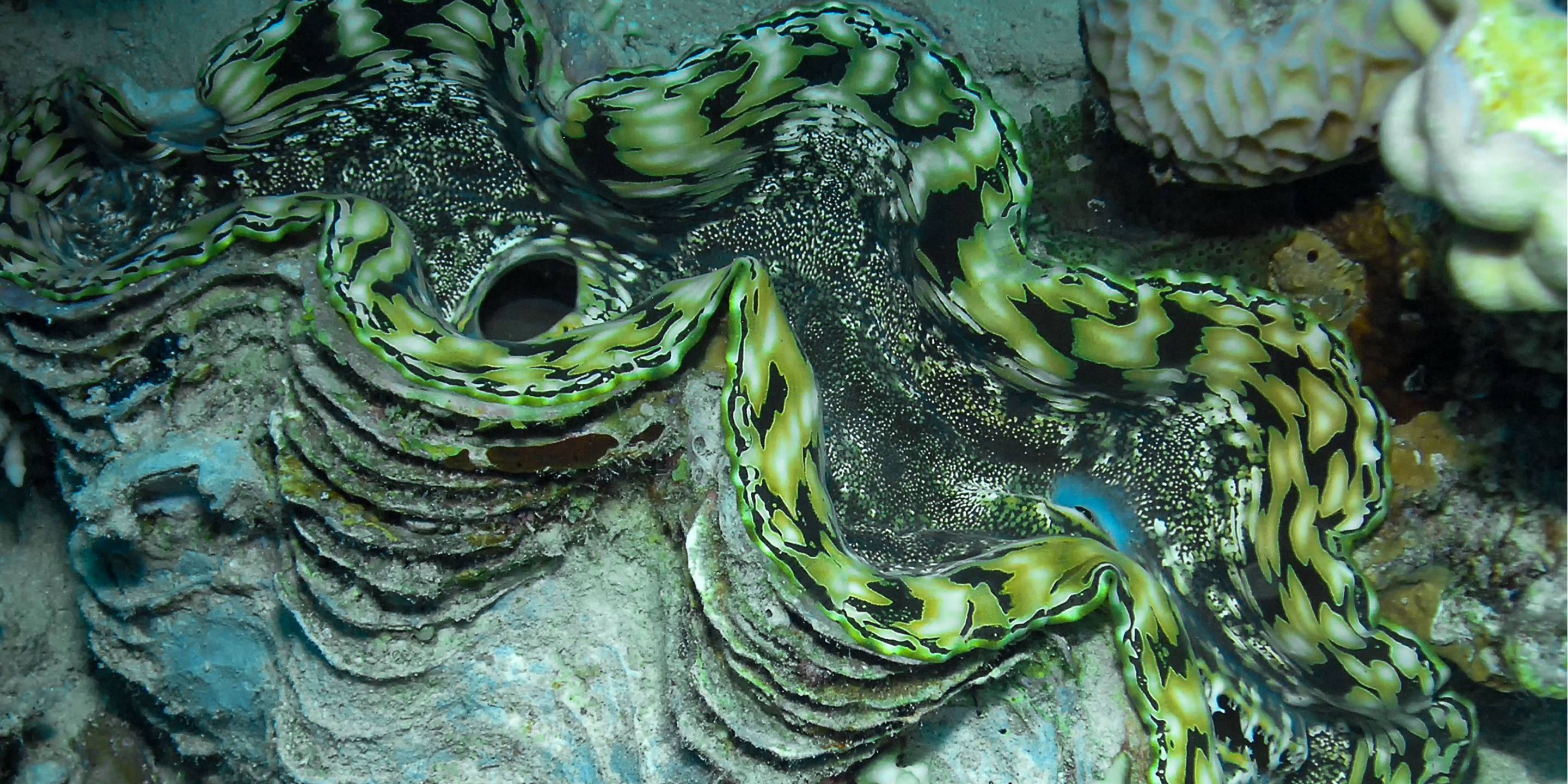


Giant clams have a hard external calcium carbonate shell with soft tissues within. Between the two shell halves lies the mantle, a soft tissue layer displaying vibrant colours—purple, green, or yellow. The mantle gets its vibrancy from a symbiotic algae called zooxanthellae that get shelter there, while the clam benefits from nutrients produced by the algae through photosynthesis.
Giant clams are large molluscs with two connected halves of a shell. Fluted Giant Clams stand out with their long shells and protruding 'scales' on the sides—features that make them easy to recognise on the reef.
Animal Type
Mollusc
Range
Indo-Pacific
Natural Habitat
Coral Reef
Diet
Plankton
Conservation Status
Not Evaluated
Extinct
Endangered
At very high risk of extinction
Find out more
Characteristics
Feeding behaviour
The nutrient source of giant clams is not only from algae found in their tissues. Giant clams are also filter feeders, feasting on dissolved matter and microorganisms by pumping water into their mantle cavity through a siphon and filtering it through ciliated tracts on their gills.
Threats faced/Conservation
These highly efficient filter feeders help keep their ecosystems healthy by removing excess nutrients from the water. Because giant clams stay in one place throughout their lives, they are vulnerable to pollution and unsustainable fishing. Fluted Giant Clams are listed as Conservation Dependent on the IUCN Red List of Threatened Species and rely on continued protection to prevent them from becoming endangered.
You May Also Like
Mollusc
Flamboyant Cuttlefish
Crustacean
Japanese Isopod
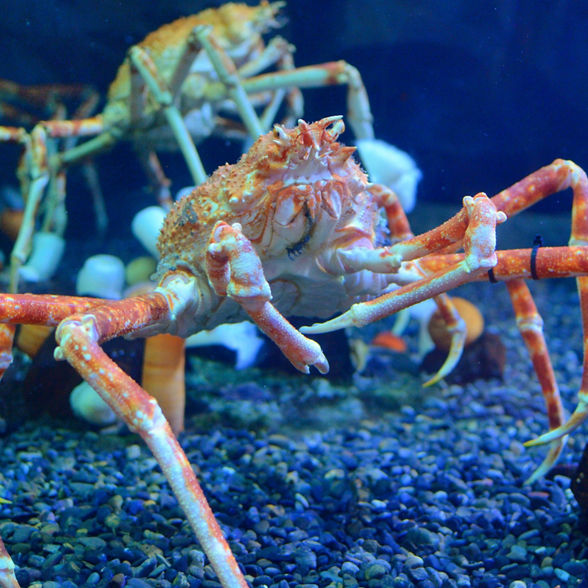
Crustacean
Japanese Spider Crab
Conservation Status
Not Evaluated
Species yet to be assessed
Data Deficient
Insufficient data for evaluation
Least Concern
At lower risk of extinction
Near Threatened
Likely to become threatened in the near future
Vulnerable
At high risk of extinction
Endangered
At very high risk of extinction
Critically Endangered
At extremely high risk of extinction
Extinct in the Wild
No longer found in the wild, survives only under human care
Extinct
No longer exists