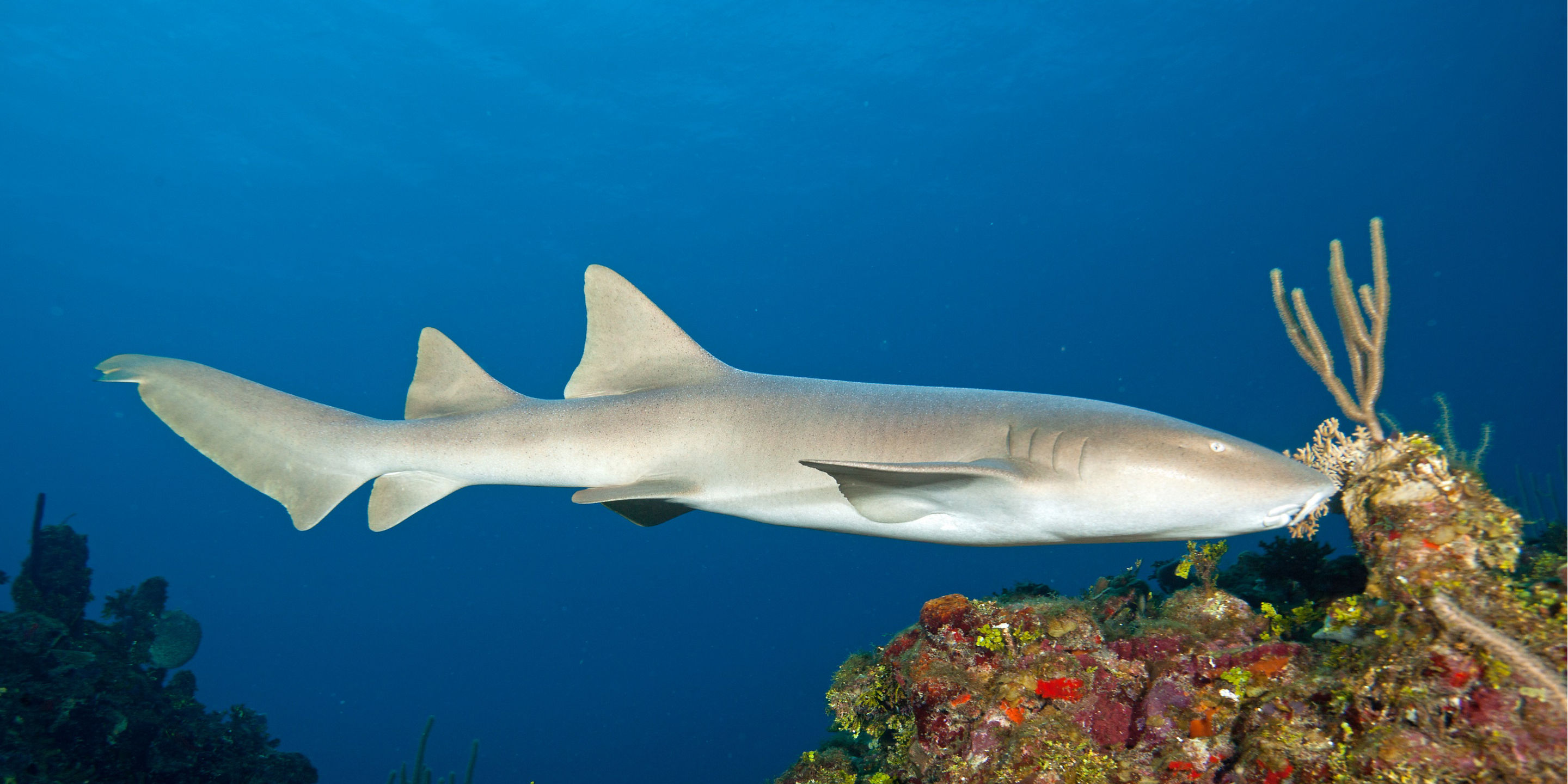


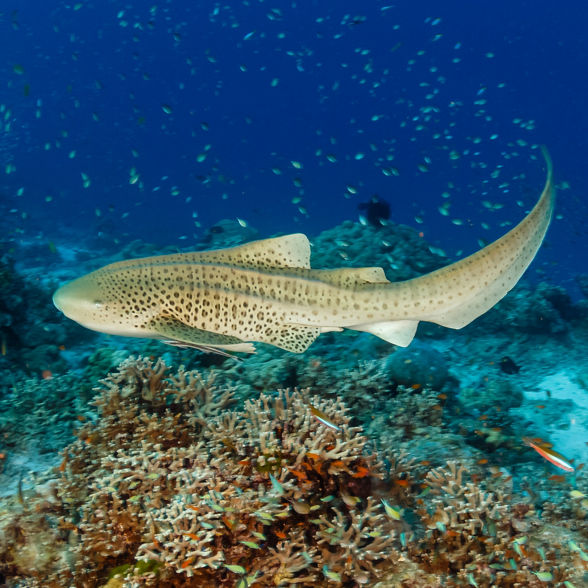
Tawny Nurse Sharks are the first known carpet shark species to exhibit the fascinating behaviour of oophagy, or “egg-eating.” Within the mother’s uterus, developing embryos can move between the left and right uterus once the yolk stores in their own egg cases are depleted, seeking and consuming unfertilised eggs. These sharks give birth to live pups after their gestation period.
As a primarily nocturnal species, Tawny Nurse Sharks can be found resting in cosy caves or on the seafloor during the day, often piled on top of other resting sharks.
Animal Type
Cartilaginous fish
Range
Indo-Pacific
Natural Habitat
Benthic Habitats
Diet
Fish, cephalopods, crustaceans
Conservation Status
Not Evaluated
Extinct
Vulnerable
At high risk of extinction
Find out mroe
Characteristics
Feeding behaviour
Tawny Nurse Sharks are nocturnal hunters, cruising along the seafloor, corals, and rocky reefs in search of small prey. They use powerful suctions from their cheek muscles to pull hidden prey from cracks and crevices. Their comb-like teeth are perfectly shaped for crushing hard-shelled prey like crabs and lobsters.
Threats faced/Conservation
These gentle sharks rely on coral reefs for shelter and food, but their homes are under threat. Climate change has led to more frequent coral bleaching, while human activities made the threats worse with destructive fishing practises and poor water quality.

Conservation Status
Not Evaluated
Species yet to be assessed
Data Deficient
Insufficient data for evaluation
Least Concern
At lower risk of extinction
Near Threatened
Likely to become threatened in the near future
Vulnerable
At high risk of extinction
Endangered
At very high risk of extinction
Critically Endangered
At extremely high risk of extinction
Extinct in the Wild
No longer found in the wild, survives only under human care
Extinct
No longer exists