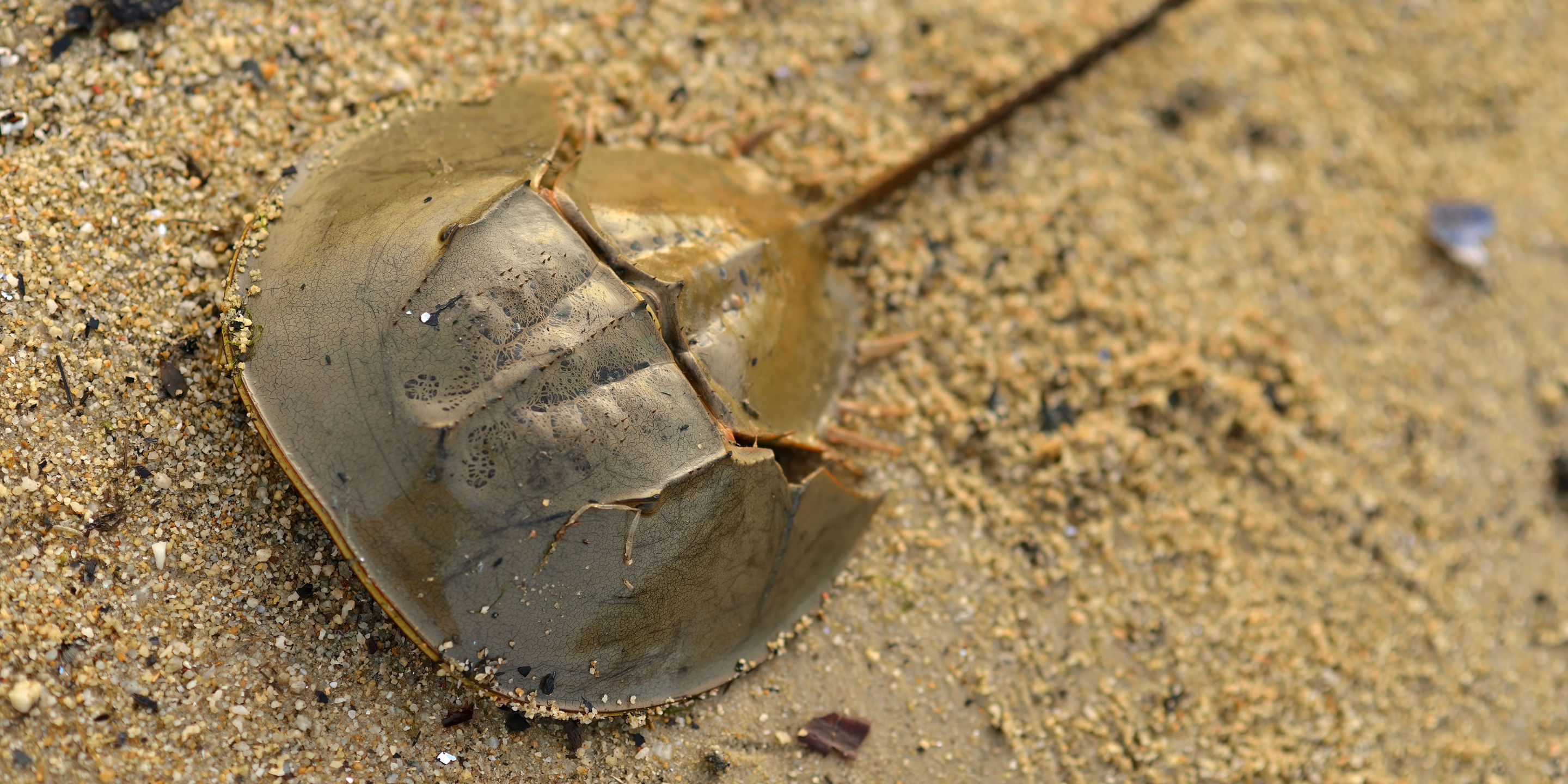


Unlike the red blood of humans, horseshoe crabs have blue blood because it contains a copper-based protein. Their blood also has special cells called amebocytes, which help fight bacterial infections by releasing a clotting protein that isolates the bacteria. These cells are used to detect bacteria in medical equipment, vaccines, and injectable drugs.
Horseshoe crabs are ancient marine arthropods, with fossils dating back over 400 million years, predating even the mighty dinosaurs. As one of only four living horseshoe crab species, this species offer insight into the history of life on Earth.
Animal Type
Chelicerate
Range
Indo-Pacific
Natural Habitat
Intertidal Zone
Diet
Detritus, molluscs
Conservation Status
Not Evaluated
Extinct
Data Deficient
Insufficient data for evaluation
Find out more
Characteristics
Feeding behaviour
Indo-Pacific Horseshoe Crabs are bottom-feeding predators that forage for live prey and organic matter to feed on. Sensitive chemoreceptors on their legs help detect food particles in the mud that they inhabit, and their first pair of appendages, also known as chelicerae, are used to guide food towards their mouth.
Threats faced/Conservation
Their unique biology has led to overexploitation, an unfortunate reality for many horseshoe crab species. When caught, horseshoe crabs have their blood harvested for biomedical testing—many do not survive or suffer lasting effects on their reproductive success. Coastal development also threatens the mudflats and beaches they depend on to survive.
Conservation Status
Not Evaluated
Species yet to be assessed
Data Deficient
Insufficient data for evaluation
Least Concern
At lower risk of extinction
Near Threatened
Likely to become threatened in the near future
Vulnerable
At high risk of extinction
Endangered
At very high risk of extinction
Critically Endangered
At extremely high risk of extinction
Extinct in the Wild
No longer found in the wild, survives only under human care
Extinct
No longer exists