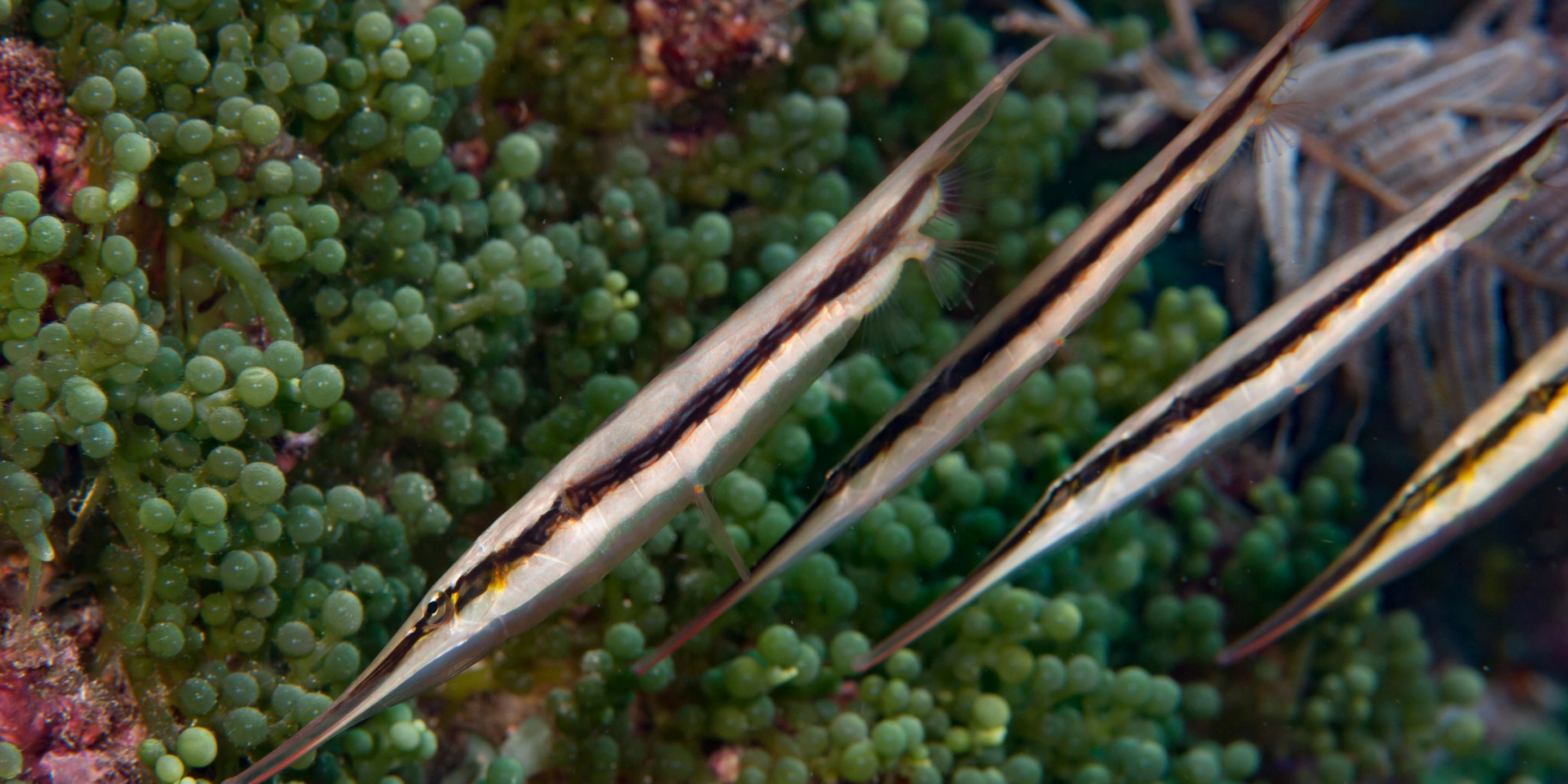


Razorfish are often seen in groups. They swim together in synchronised movements with their heads pointed down in a striking vertical orientation. This posture likely helps with camouflage and protection, letting them dart among sea urchin spines or corals to escape predators. Unlike most fish, they have no scales—their bodies are covered in thin plates that act like armour.
With a streamlined razor-like body coloured by a dark band across its length, and a unique style of vertical swimming, razorfish are a deeply fascinating marine species.
Animal Type
Bony Fish
Range
Indo-West Pacific
Natural Habitat
Coastal Waters
Diet
Plankton
Conservation Status
Not Evaluated
Extinct
Data Deficient
Insufficient data for evaluation
Find out more
Characteristics
Feeding behaviour
Razorfish have an elongated snout and fused jaws that form a tubular feeding structure. They use pivot feeding—a specialised technique that combines suction and a swift forward lunge—to strike their prey with speed and precision.
Threats faced/Conservation
Completely dependent on coral reefs and seagrass beds for shelter and food, razorfish are highly sensitive to habitat loss and degradation. Human activities that damage these coastal habitats can have serious impacts on their survival.
You May Also Like
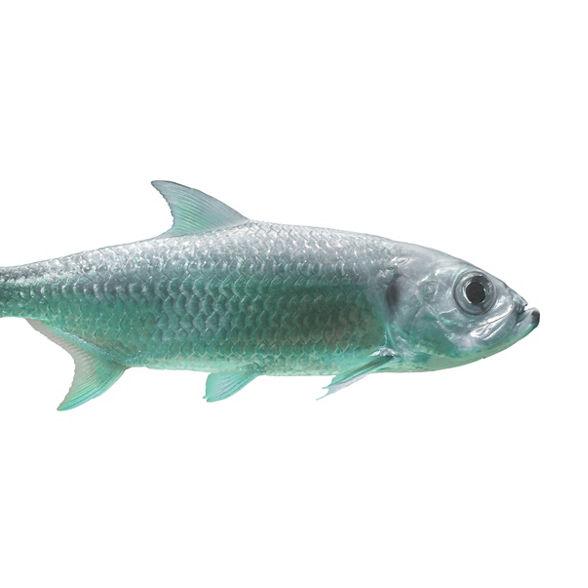
Fish
Indo-Pacific Tarpon
Conservation Status
Not Evaluated
Species yet to be assessed
Data Deficient
Insufficient data for evaluation
Least Concern
At lower risk of extinction
Near Threatened
Likely to become threatened in the near future
Vulnerable
At high risk of extinction
Endangered
At very high risk of extinction
Critically Endangered
At extremely high risk of extinction
Extinct in the Wild
No longer found in the wild, survives only under human care
Extinct
No longer exists