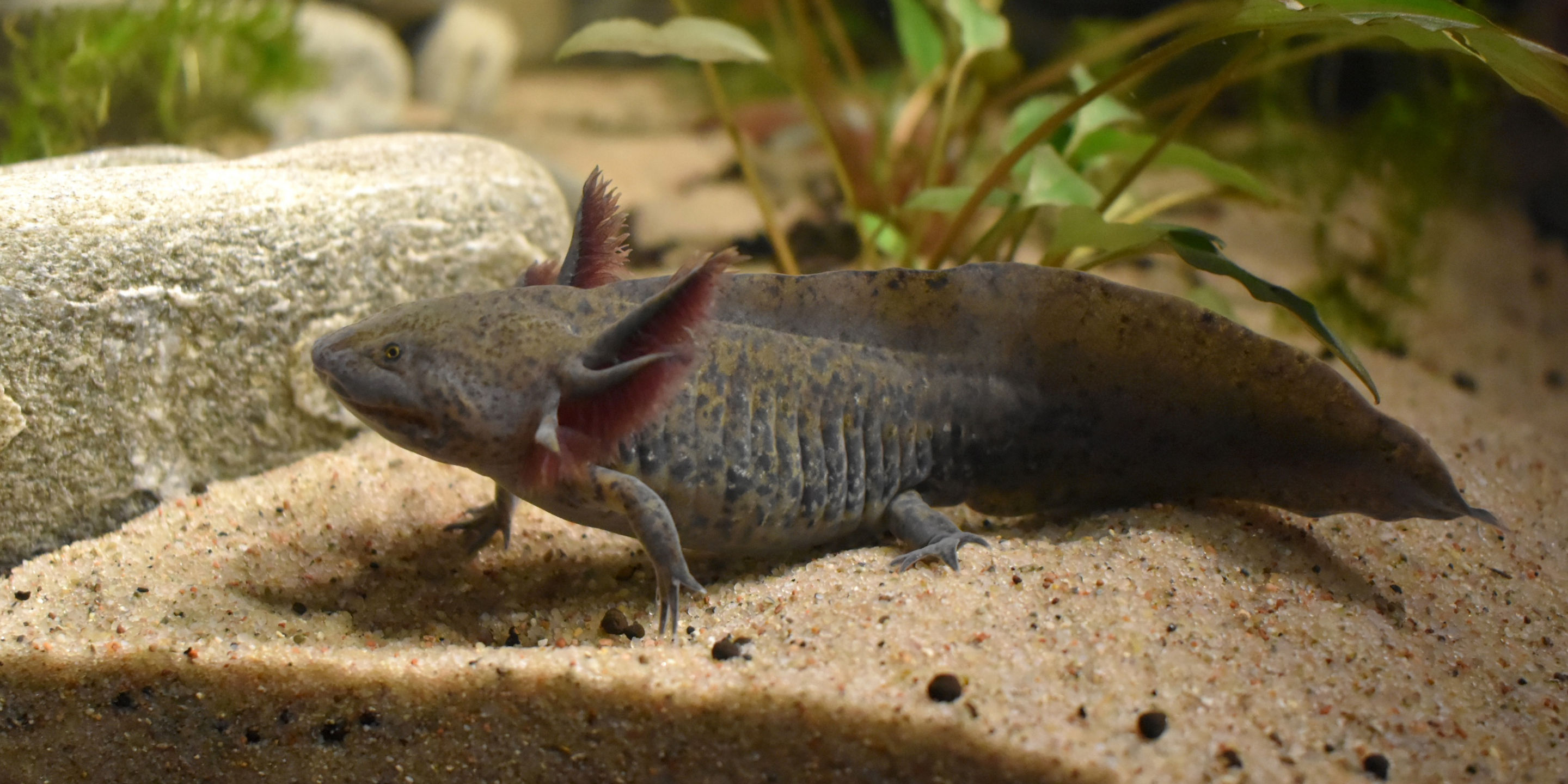


Remarkably, Axolotls can regenerate many of their body parts, including essential organs such as the heart, lungs, spinal cords, and even parts of their brain, without permanent scarring. This makes them a key research model in regenerative medicine and biology, as scientists study these extraordinary healing abilities.
Axolotls are salamanders notable for their neoteny—they retain juvenile traits into adulthood. Unlike other salamanders, they live almost entirely in water without undergoing metamorphosis.
Animal Type
Amphibian
Range
Mexico: Lakes and wetlands throughout the Mexican Central Valley
Natural Habitat
Freshwater Habitats
Diet
Crustaceans, molluscs, fish
Conservation Status
Not Evaluated
Extinct
Critically Endangered
At extremely high risk of extinction
Find out more
Characteristics
Feeding behaviour
Axolotls may look gentle, but they are skilled predators. They use suction feeding to snap up worms, crustaceans, and insect larvae, sometimes swallowing bits of gravel to help digest their food. As nocturnal hunters, they spend their days quietly burrowed, staying out of sight and safe from predators.
Threats faced/Conservation
Axolotls are critically endangered, mainly due to habitat loss and the introduction of invasive species. Human activities have greatly altered their natural environment. Today, conservation efforts are working to restore these habitats and give Axolotl populations a chance to recover.
You May Also Like
Conservation Status
Not Evaluated
Species yet to be assessed
Data Deficient
Insufficient data for evaluation
Least Concern
At lower risk of extinction
Near Threatened
Likely to become threatened in the near future
Vulnerable
At high risk of extinction
Endangered
At very high risk of extinction
Critically Endangered
At extremely high risk of extinction
Extinct in the Wild
No longer found in the wild, survives only under human care
Extinct
No longer exists