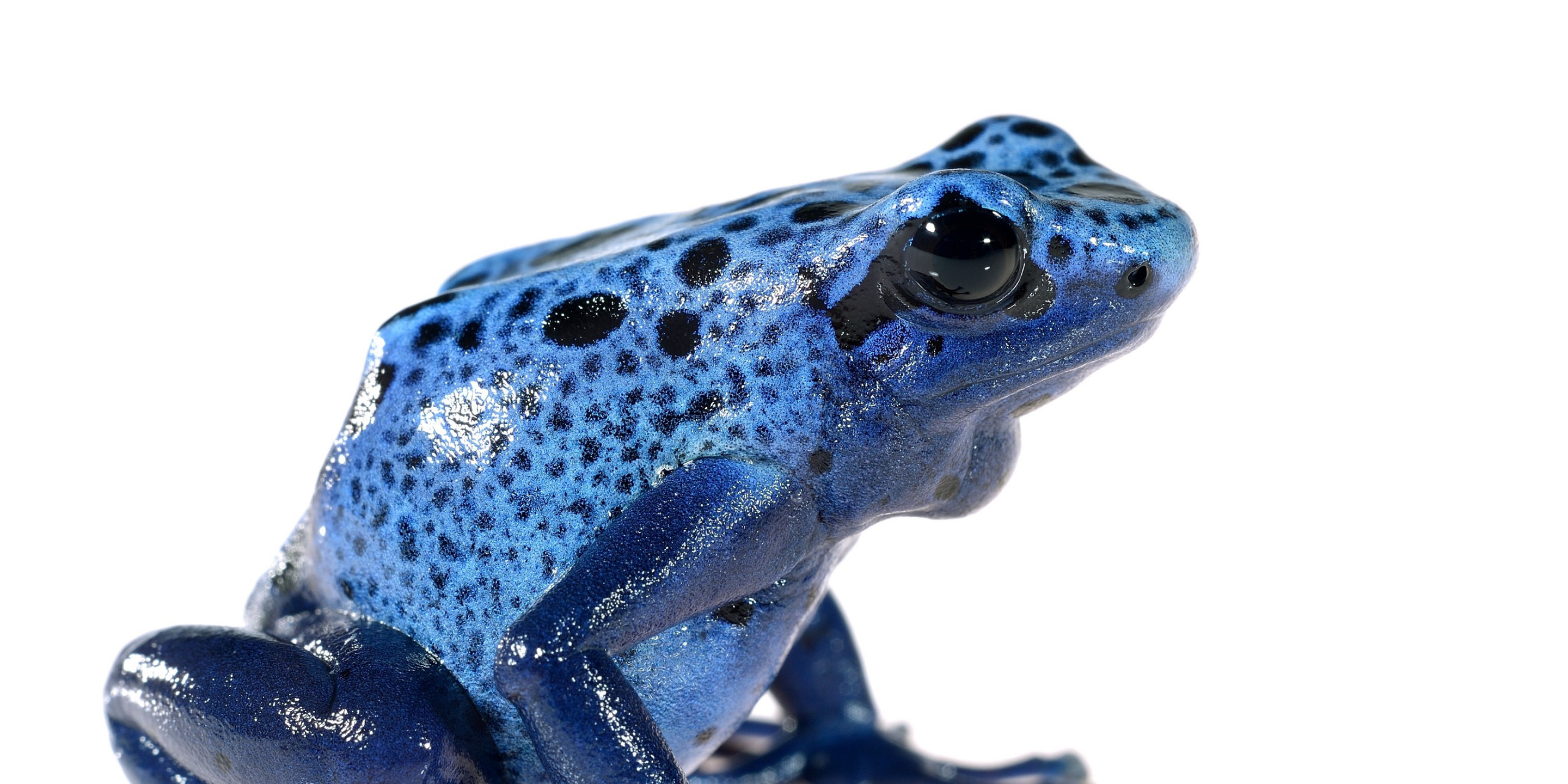


The bright colour of Dyeing Poison Frogs may look attractive, but it should also be viewed as a threat. This vibrantly coloured skin helps warn potential predators that the frog is poisonous and should not be eaten. Dangerous toxins are secreted by glands that cover their body, which are strong enough to paralyse, or even kill, predators.
In warm, humid forests, Dyeing Poison Frogs can thrive to their fullest. They favour dark and moist environments and can especially be found near small streams and among moss-covered rocks.
Animal Type
Amphibian
Natural Habitat
Terrestrial Habitats
Range
South America
Diet
Insects
Conservation Status
Not Evaluated
Extinct
Least Concern
At lower risk of extinction
Find out more
Characteristics
Feeding behaviour
Dyeing Poison Frogs feed on insects like ants, beetles, and flies. Interestingly, the toxins they secrete are also found in their prey—especially ants. This suggests that diet helps the frogs build their powerful chemical defences and stay safe from predators.
Threats faced/Conservation
These visually stunning frogs face serious threats in their natural habitats. Their forest homes are disappearing due to logging and conversion to farmlands. They are also targeted by the illegal pet trade, with hundreds smuggled out regularly. Because of these pressures, they are now one of the most threatened poison dart frog species.
You May Also Like
Conservation Status
Not Evaluated
Species yet to be assessed
Data Deficient
Insufficient data for evaluation
Least Concern
At lower risk of extinction
Near Threatened
Likely to become threatened in the near future
Vulnerable
At high risk of extinction
Endangered
At very high risk of extinction
Critically Endangered
At extremely high risk of extinction
Extinct in the Wild
No longer found in the wild, survives only under human care
Extinct
No longer exists