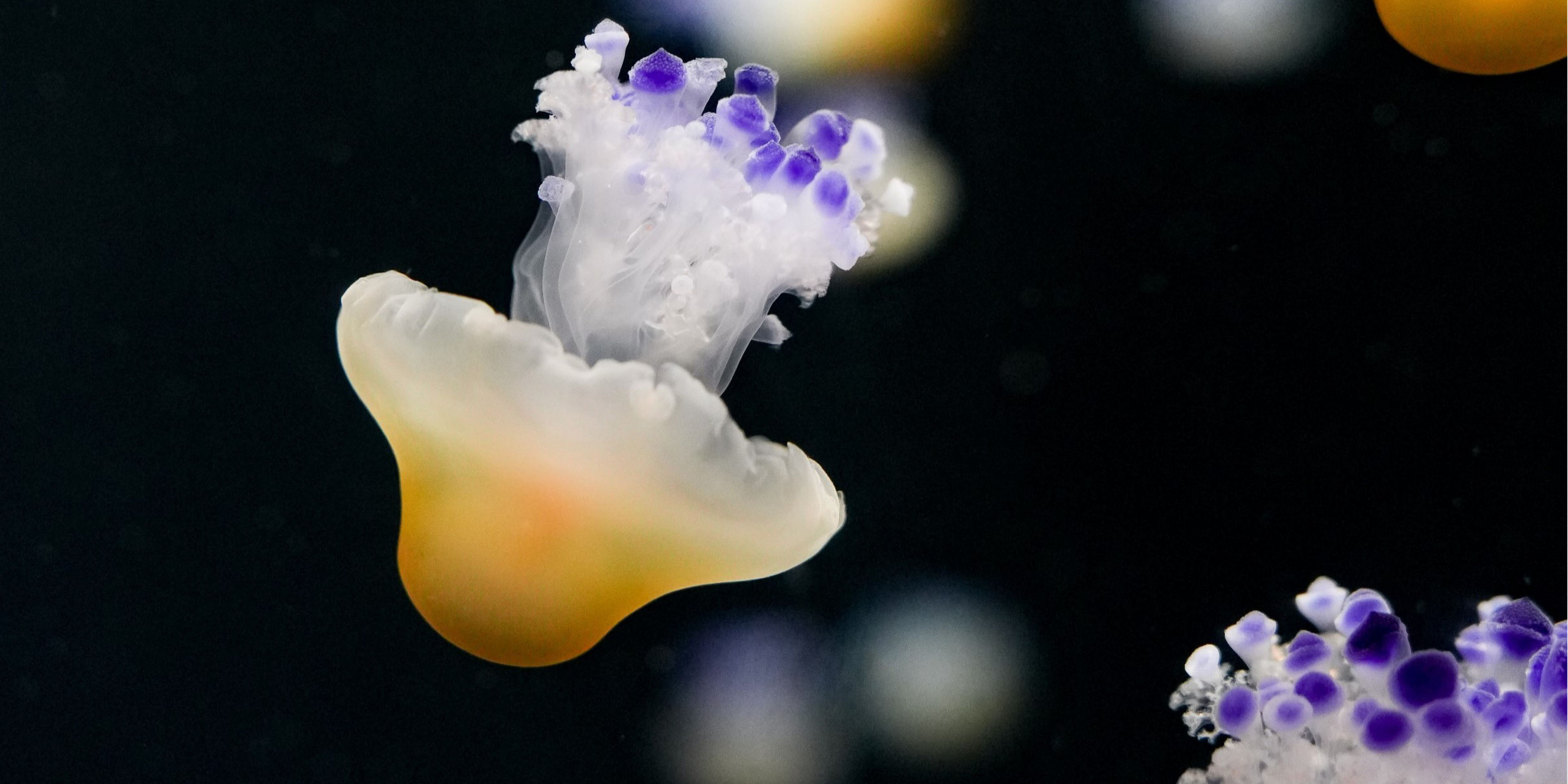


The fascinating shape of Fried Egg Sea Jellies hides an intriguing biology. They have many short appendages, usually coloured deep purple, with mouth openings to capture prey. Their bells are made up of three layers: the epidermis, which houses a basic nervous system; the mesoglea, a jelly-like layer that gives structure; and the gastrodermis, the innermost layer that helps nutrient exchange.
With an elevated dome of striking yellow, surrounded by a translucent body, the gelatinous bell of these sea jellies resembles a sunny-side-up egg, earning them the name 'Fried Egg Sea Jelly'.
Animal Type
Cnidarian
Range
Mediterranean Sea, Aegean Sea
Natural Habitat
Open Ocean
Diet
Plankton
Conservation Status
Not Evaluated
Extinct
Not Evaluated
Species yet to be assessed
Find out more
Characteristics
Feeding behaviour
Fried Egg Sea Jellies host specialised algae called zooxanthellae in their tissues. In this unique partnership, also known as mutualism, the algae produce food through photosynthesis and share the nutrients with the sea jellies, while the sea jellies provide a safe place for the algae to live in. They also catch a variety of plankton using their distinctive appendages.
Threats faced/Conservation
Populations rise and fall naturally with changing ocean conditions—but human activities may be driving unusually large blooms. Since this species reproduces in warm waters, rising ocean temperatures could make blooms more frequent. Runoff from coastal activities, like farming, adds nutrients that may also fuel rapid growth.
Conservation Status
Not Evaluated
Species yet to be assessed
Data Deficient
Insufficient data for evaluation
Least Concern
At lower risk of extinction
Near Threatened
Likely to become threatened in the near future
Vulnerable
At high risk of extinction
Endangered
At very high risk of extinction
Critically Endangered
At extremely high risk of extinction
Extinct in the Wild
No longer found in the wild, survives only under human care
Extinct
No longer exists