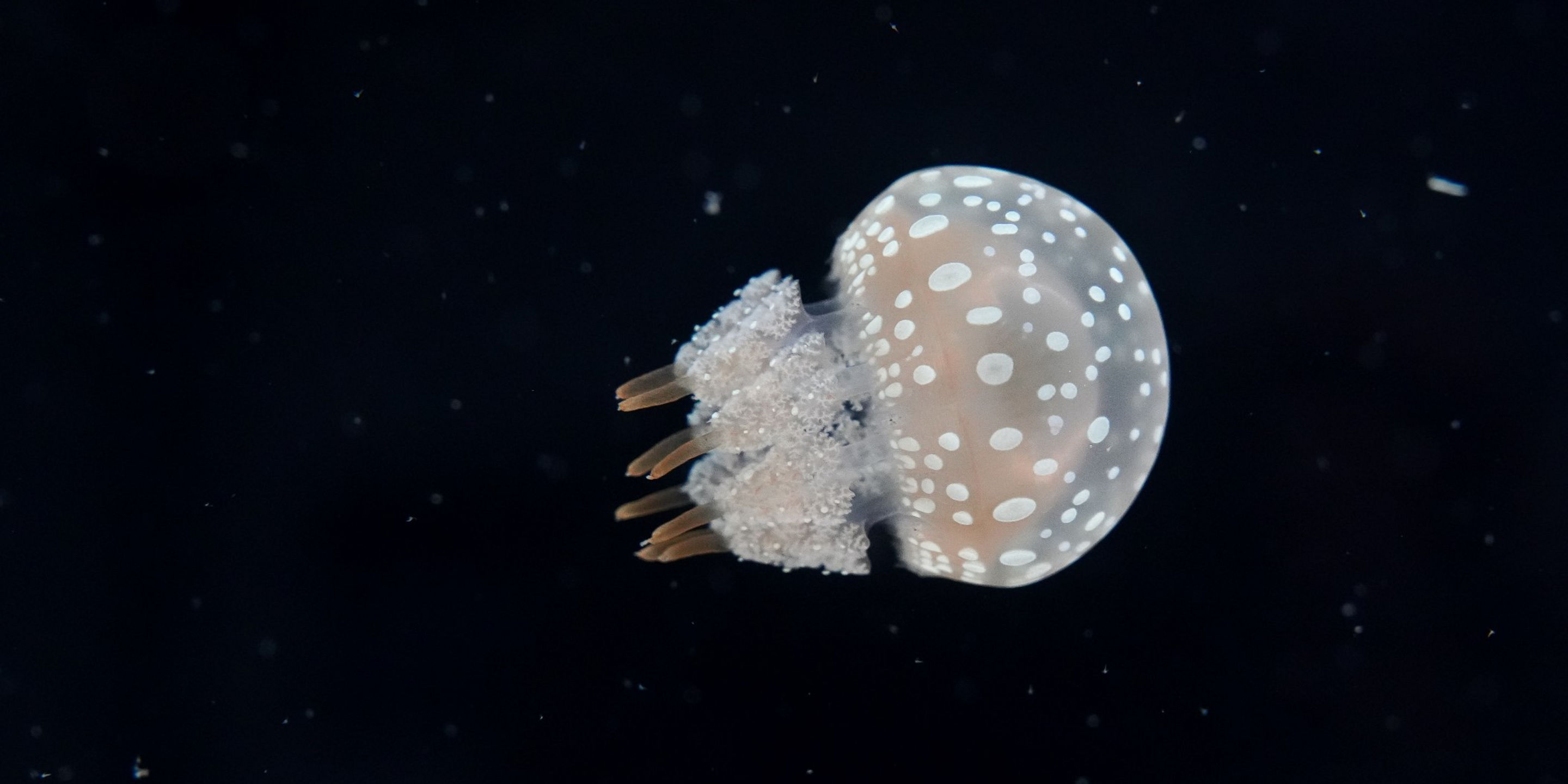


Most sea jellies use venomous stinging tentacles lined with toxin-injecting cells called cnidocytes to catch their prey. But White Spotted Sea Jellies are different in their lack of such tentacles. Instead, they release a mucus containing stinging cell clusters into the water, which can help stun their prey or offer protection against predators.
Sporting a round, speckled bell and eight oral arms that end in large, club-like appendages, White Spotted Sea Jellies are a distinct species that live in bays, lakes and lagoons.
Animal Type
Cnidarian
Range
Indo-West Pacific
Natural Habitat
Coastal Waters
Diet
Plankton
Conservation Status
Not Evaluated
Extinct
Not Evaluated
Species yet to be assessed
Find out more
Characteristics
Feeding behaviour
White Spotted Sea Jellies feed differently from many sea jellies. Unlike most species that have a single mouth under the bell, White Spotted Sea Jellies have many small mouth openings along their oral arms. These openings help them catch plankton from the surrounding water, providing around 30% of their nutritional needs.
Threats faced/Conservation
This species is vulnerable to changes in the environment, which can lead to population declines. Climate change and extreme weather events, such as El Niño, can raise temperatures and salinity in the lagoons they live in—conditions that may be harmful to their survival.
Conservation Status
Sporting a round, speckled bell and eight oral arms that end in large, club-like appendages, White Spotted Sea Jellies are a distinct species that live in bays, lakes and lagoons.
Not Evaluated
Species yet to be assessed
Data Deficient
Insufficient data for evaluation
Least Concern
At lower risk of extinction
Near Threatened
Likely to become threatened in the near future
Vulnerable
At high risk of extinction
Endangered
At very high risk of extinction
Critically Endangered
At extremely high risk of extinction
Extinct in the Wild
No longer found in the wild, survives only under human care
Extinct
No longer exists