
Published on 20 March 2026
No brain, no bones, no central nervous system. Yet behind the delicate beauty of sea jellies lies a world of complexity that makes caring for them one of the most challenging jobs in an oceanarium. Or some say, in the world.
And who better to spill the tea than a Sea Jelly Specialist? So here goes.
1) Only Gentle Hands Need Apply
Sea jellies are 95% water. One wrong move in their habitat—a splash, a bubble, a strong current—and it can be deadly.
That’s right. Even air bubbles are a sea jelly’s enemy. A single bubble trapped in its bell can damage its tissues.
Every adjustment, every tube and hose, must be carefully managed. Even feeding is a balancing act: too much, and they sink; too little, and they starve.
Think caring for toddlers is tough? Try sea jellies.
2) Patience, Precision, Finesse
Sea Jelly Specialists spend surprising amounts of time doing what looks like “jelly babysitting”: nudging a drifting jelly upright, tweaking currents by millimetres, or figuring out why the whole group suddenly decides to gather in one mysterious corner.
Then there’s breeding, which is probably THE biggest challenge. Sea jellies aren’t born as jellies. They start as tiny polyps that look nothing like their adult selves. Think of them as the “caterpillar stage” of a butterfly. But sometimes, these polyps simply refuse to transform.
Triggering that change feels like a mad scientist experiment: different temperatures, routines, timings, hoping for the right combination. Every species has its own secret recipe. The moment it finally works? Pure triumph.
3) Conservation and Collaboration
Caring for sea jellies isn’t just about keeping them alive. It contributes directly to science and conservation. By monitoring their life cycles and behaviour, Sea Jelly Specialists help researchers understand jelly ecology, plankton dynamics, and the effects of climate change.
Through partnerships with universities and research institutions, every successful culture adds to global knowledge. These insights can even inspire medical advances and inform how we protect our oceans.
Cool huh?

Why We Love the Blob Life
So why put so much effort into creatures with no brain? It boils down to fascination and purpose. Sea jellies are ancient survivors, drifting in oceans for over 500 million years. They’re hypnotic to watch, and every pulse is a reminder of the delicate science that makes it possible.
For Sea Jelly Specialists, there’s a deeper mission. Every jelly cared for, every life cycle observed, contributes to conservation, research, and public education. Visitors leave with newfound respect, and maybe a spark of curiosity to become ocean stewards themselves.
Yes, sea jellies may be brainless blobs, but they challenge us every day. They keep us humble, patient, and endlessly curious. And that’s why, as challenging as it is, being a Sea Jelly Specialist is one of the most rewarding jobs in the world.
Want to Meet the Team Behind the Magic?
Dive deeper into the world of sea jelly care with Animal Spotlight: Sea Jellies, a guided experience that brings you into the heart of our sea jelly nursery and husbandry work.
Read More Articles

Insider Tips: Top 5 Things to Do at Singapore Oceanarium
Planning a day out with your crew? Whether you're all about marine life or just hunting for something fun and different, Singapore Oceanarium is packed with experiences that’ll make your group chat light up. Here are the top 5 things to explore when you visit.
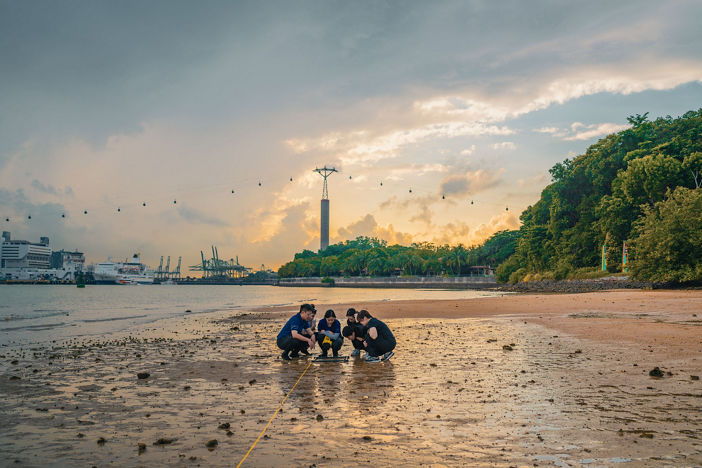
Love the Ocean? Become a Citizen Scientist.
When the tide recedes, Singapore’s coastline reveals a hidden world teeming with life. Through Singapore Oceanarium’s Citizen Science programme, anyone can step into this world.
-262301:3by2?wid=702&hei=468)
Sleep Beside Sharks? Meet the New Ocean Dreams.
Imagine lying in your sleeping bag as manta rays glide above you, sharks silently patrol the waters, and schools of shimmering fish dance in front of your eyes. This is not a dream. This is Ocean Dreams, Singapore Oceanarium’s reimagined overnight experience.

Five Years, One Oceanarium, Endless Lessons
When I first joined the project, “Singapore Oceanarium” was just an idea to many. For me, it became five years of learning, challenges, and growth.