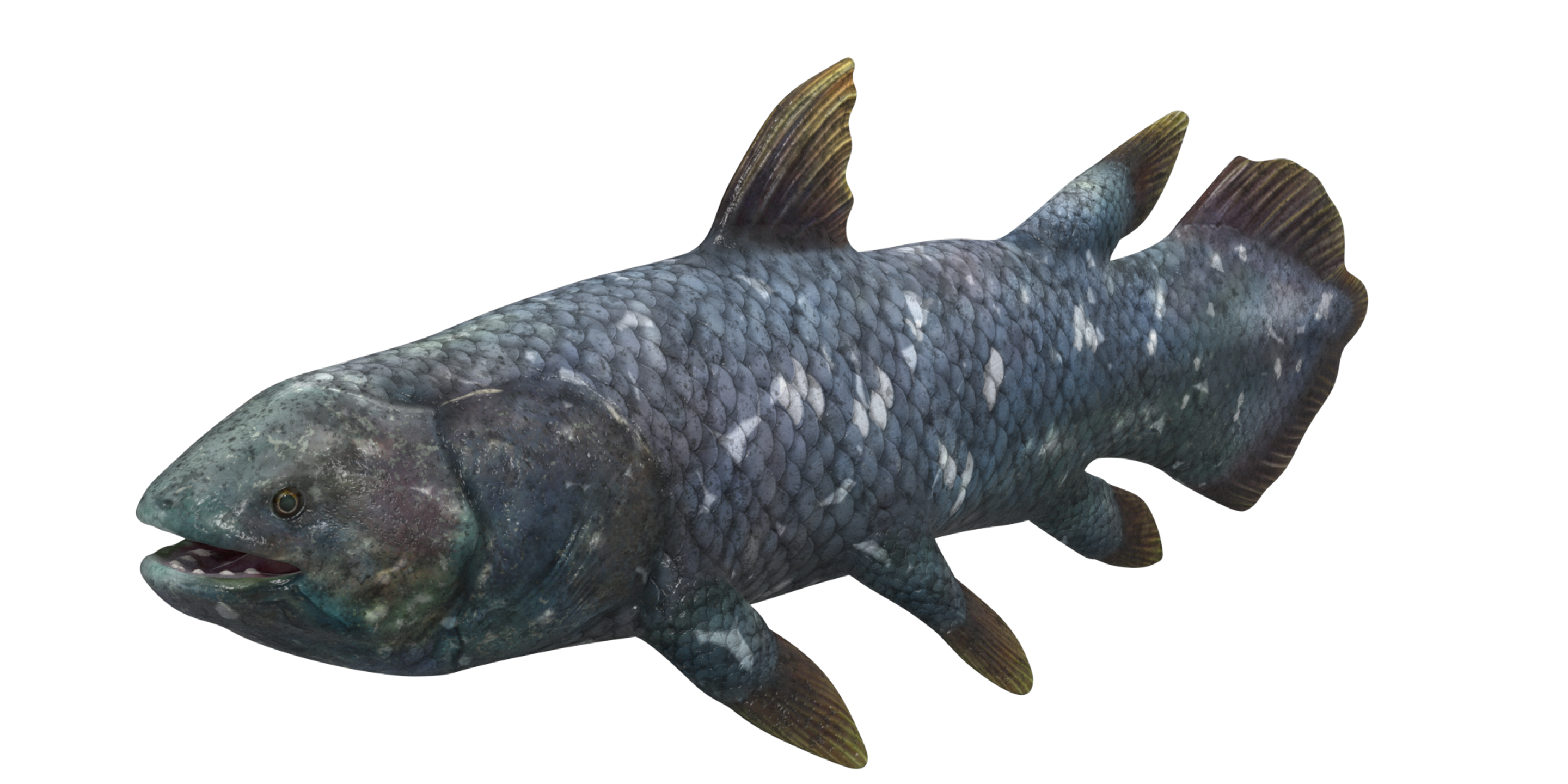


Coelacanths are the only living vertebrates with a jointed skull. This allows them to open their powerful jaws widely and deliver a strong bite, enhancing their ability to catch and consume prey effectively.
Once believed to have gone extinct with the dinosaurs 65 million years ago, this ancient group of fish has a fossil history stretching back 360 million years. Today, only two living species remain, living in deep waters up to 700 m below the surface.
Animal Type
Bony Fish
Range
Indo-West Pacific
Natural Habitat
Deep Ocean
Diet
Fish, cephalopods, crustaceans
Conservation Status
Not Evaluated
Extinct
Critically Endangered
At extremely high risk of extinction
Find out more
Characteristics
Feeding behaviour
Coelacanths are nocturnal, slow-moving drift hunters that conserve energy by passively floating and waiting for prey to pass by. This low-energy hunting strategy is effective for ambushing prey such as cephalopods and fish. When needed, coelacanths can move swiftly to capture prey or escape potential threats.
Threats faced/Conservation
All extant species of coelacanths are endangered and protected under the Convention on International Trade in Endangered Species of Wild Flora and Fauna (CITES)—the international agreement that helps safeguard wildlife from overexploitation.
Conservation Status
Not Evaluated
Species yet to be assessed
Data Deficient
Insufficient data for evaluation
Least Concern
At lower risk of extinction
Near Threatened
Likely to become threatened in the near future
Vulnerable
At high risk of extinction
Endangered
At very high risk of extinction
Critically Endangered
At extremely high risk of extinction
Extinct in the Wild
No longer found in the wild, survives only under human care
Extinct
No longer exists