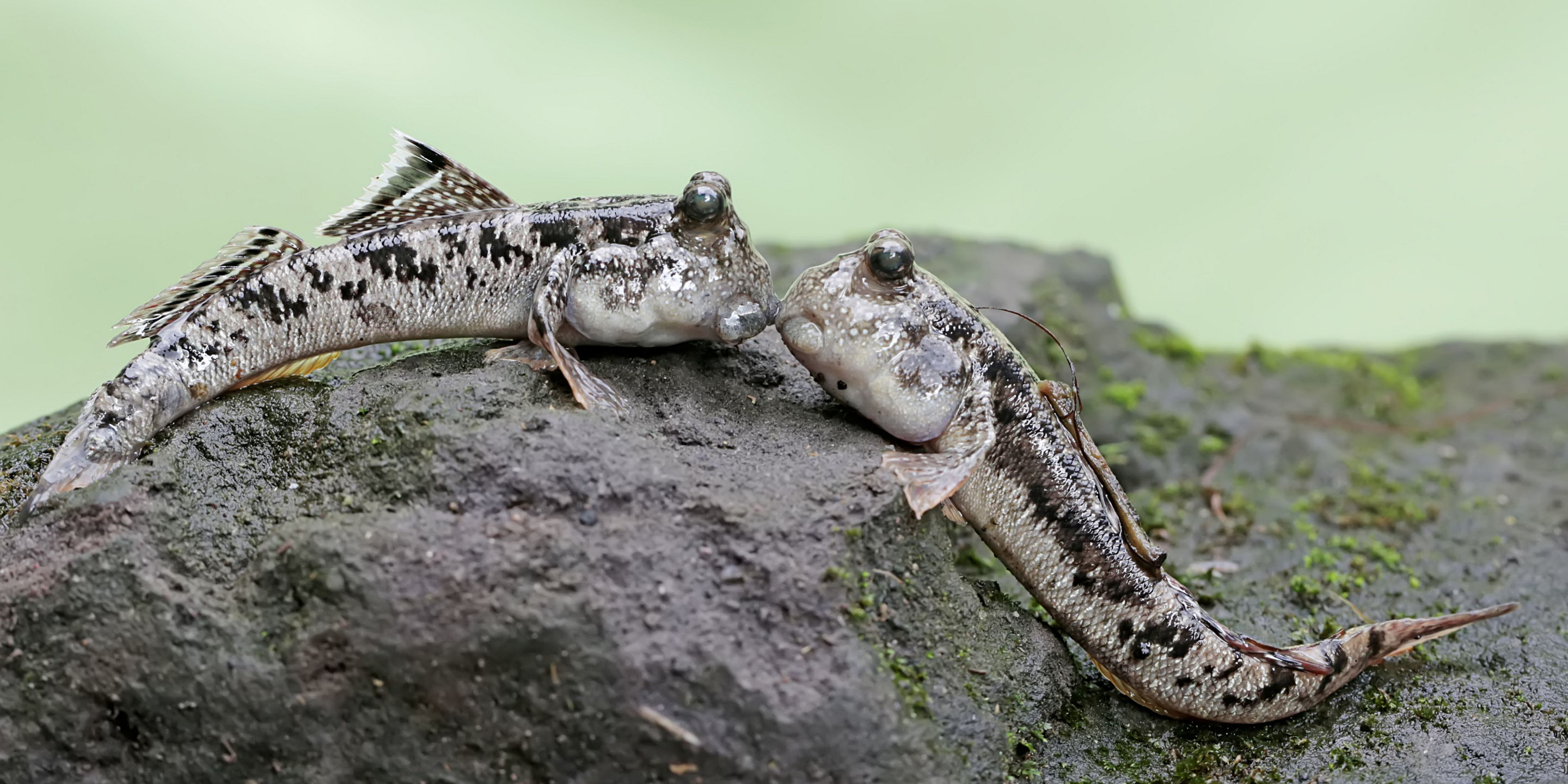


Mudskippers rely on water to breathe but have specialised gills that extract oxygen from both air and water. Their thick, moist skin helps retain moisture, preventing dehydration and allowing them to survive on land for up to 37 hours. With modified pectoral and pelvic fins that act like limbs, they can “walk” or hop across muddy surfaces with ease.
With fins that allow them to 'walk' or 'skip' on land or muddy surfaces, Barred Mudskippers can move effortlessly between land and water—just like other mudskippers. Mudskippers are easily recognised by their distinctive round, bulging eyes.
Animal Type
Bony Fish
Range
Indo-Pacific
Natural Habitat
Intertidal Zone
Diet
Crustaceans, worms
Conservation Status
Not Evaluated
Extinct
Least Concern
At lower risk of extinction
Find out more
Characteristics
Feeding behaviour
During low tides, mudskippers forage on mudflats, using their mouths to probe the mud and sand for food. They can also make daring leaps out of the water to catch flying insects or prey, or feed on algae by scraping them off rocks or other substrates, supplementing their diet with plant material.
Threats faced/Conservation
Living along coastal areas, mudskippers are vulnerable to habitat loss caused by coastal development. As their muddy homes disappear, so does the space they need to feed, move, and thrive.
Conservation Status
Not Evaluated
Species yet to be assessed
Data Deficient
Insufficient data for evaluation
Least Concern
At lower risk of extinction
Near Threatened
Likely to become threatened in the near future
Vulnerable
At high risk of extinction
Endangered
At very high risk of extinction
Critically Endangered
At extremely high risk of extinction
Extinct in the Wild
No longer found in the wild, survives only under human care
Extinct
No longer exists