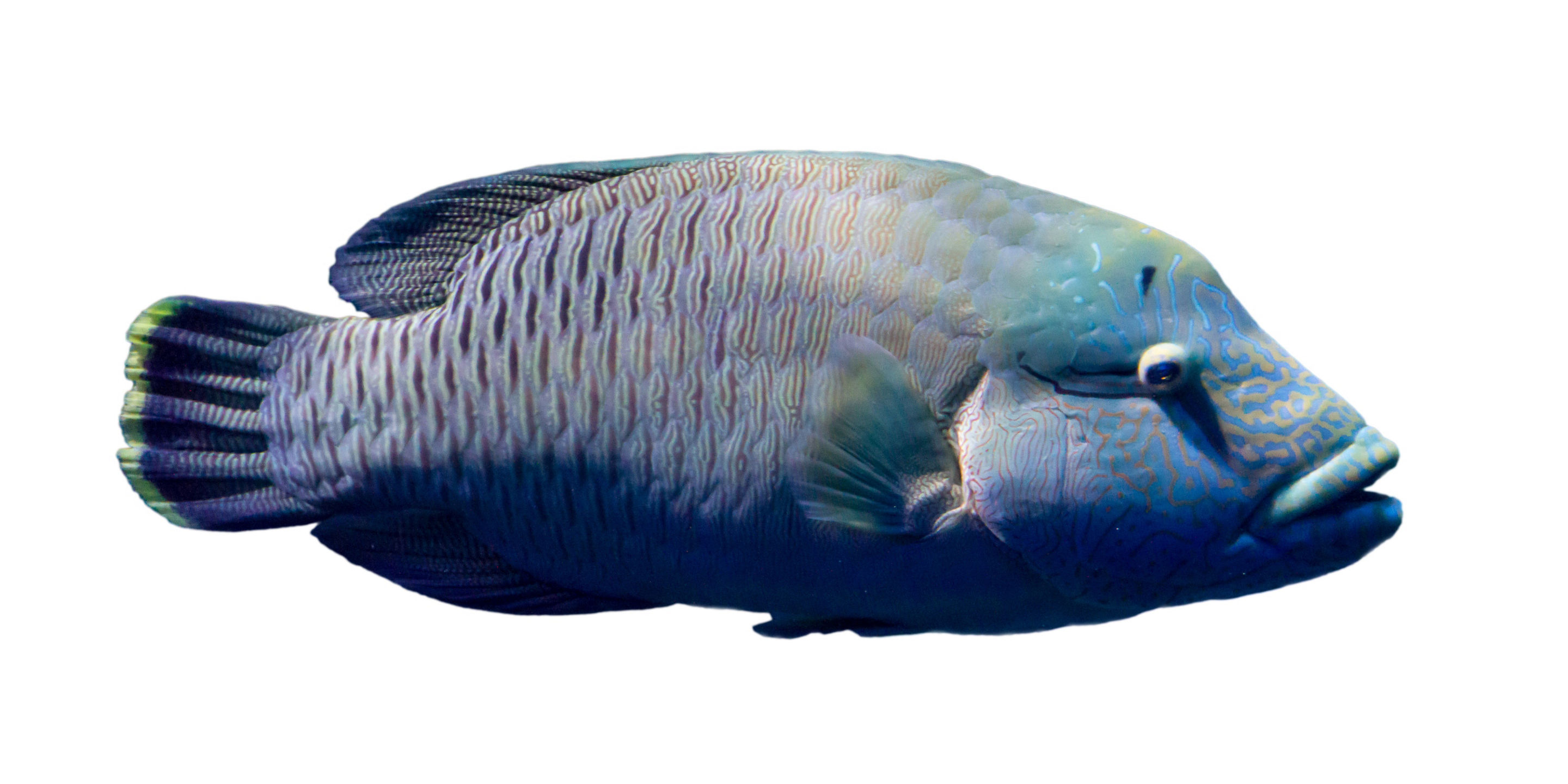


Napoleon Wrasses are strikingly colourful—females are rusty red-orange in colour, while males display bright blue-green hues. Their strong, beak-like jaws, with teeth fused together, help them feed on hard-shelled prey. A second set of pharyngeal teeth, located in the throat, crushes and processes their prey further before digestion.
Sporting a prominent hump on their foreheads, Napoleon Wrasses are large fish usually found around reefs. As they age, their humps grow as well, allowing them to be easily distinguished.
Animal Type
Bony Fish
Range
Indo-Pacific
Natural Habitat
Coral Reef
Diet
Fish, molluscs, crustaceans
Conservation Status
Not Evaluated
Extinct
Endangered
At very high risk of extinction
Find out more
Characteristics
Feeding behaviour
Napoleon Wrasses are one of the few predators that can eat toxic animals like Crown-of-thorns Sea Stars, boxfishes, and sea hares. Crown-of thorns Sea Stars are voracious predators of corals and harm coral reefs when their numbers grow uncontrolled. By feeding on these potentially harmful species, they help keep populations in balance and play an important role in keeping reef ecosystems healthy.
Threats faced/Conservation
Widespread habitat damage and overfishing have led to Napoleon Wrasses being listed as Endangered on the IUCN Red List of Threatened Species. Their slow reproduction makes it harder for populations to recover. Fishing methods used to catch them, such as using sodium cyanide to stun fish, also damage live corals and harm the reef.
Conservation Status
Not Evaluated
Species yet to be assessed
Data Deficient
Insufficient data for evaluation
Least Concern
At lower risk of extinction
Near Threatened
Likely to become threatened in the near future
Vulnerable
At high risk of extinction
Endangered
At very high risk of extinction
Critically Endangered
At extremely high risk of extinction
Extinct in the Wild
No longer found in the wild, survives only under human care
Extinct
No longer exists