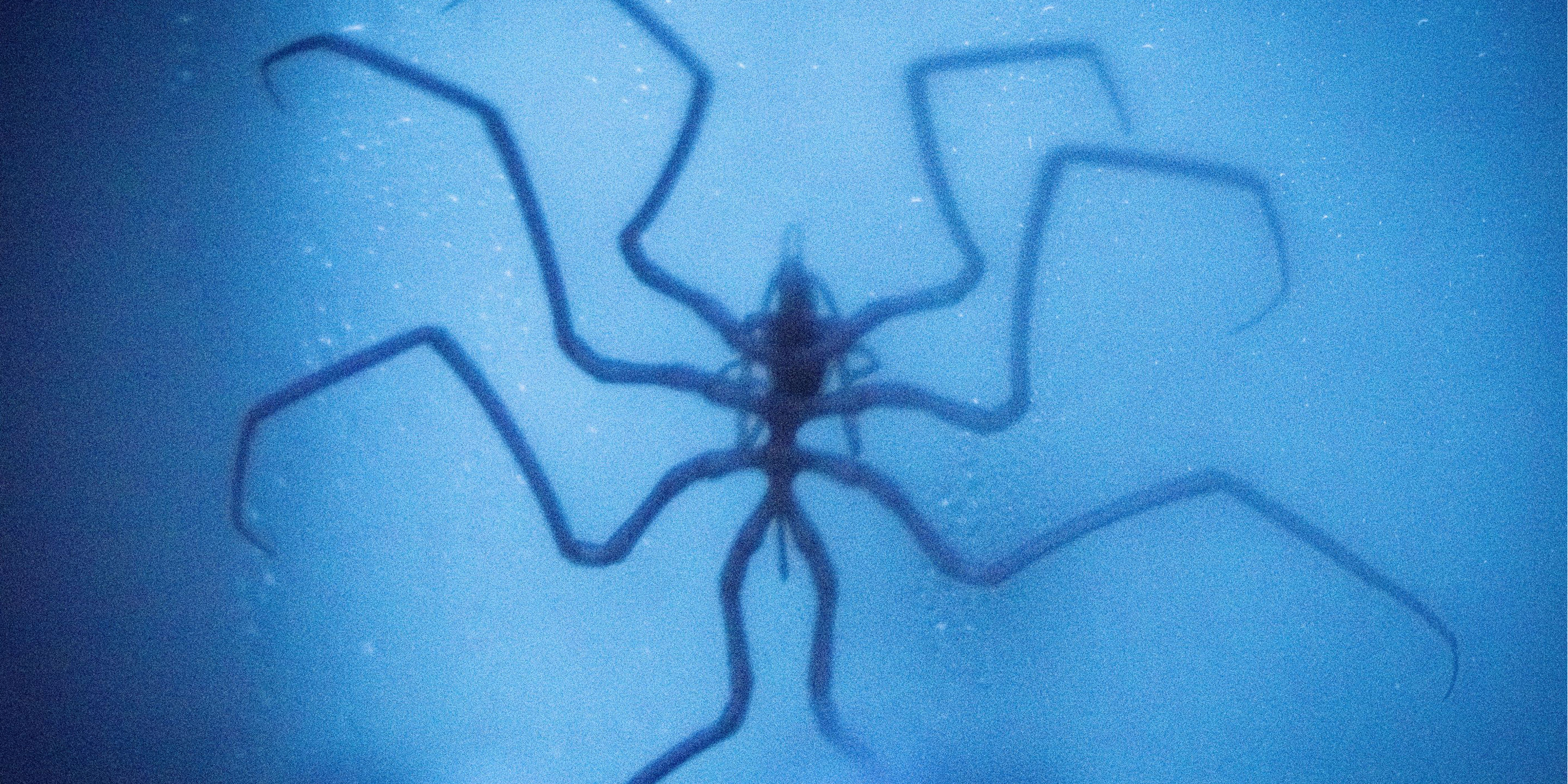


Sea spiders have jointed appendages that serve multiple roles—treading delicately on the seafloor or on water, even housing vital organs. Instead of breathing through gills or lungs, oxygen diffuses through their legs.. With long legs, there is greater surface area for efficient respiration. Their egg-carrying appendages, called ovigers, are just as multi-functional, used for cleaning, courtship, and reproduction.
Despite their name, Deep Sea Spiders are unique marine arthropods distinct from, but related to, spiders and crabs. They belong to the class Pycnogonida, which has over 1,300 known species.
Animal Type
Chelicerate
Range
North Pacific
Diet
Sponges, molluscs
Natural Habitat
Deep Ocean
Conservation Status
Not Evaluated
Extinct
Not Evaluated
Species yet to be assessed
Find out more
Characteristics
Feeding behaviour
Sea spiders are carnivores that behave like parasites as they do not kill their prey directly when they feed. They use a long, tube-like mouthpart called a proboscis to pierce soft-bodied prey and draw out nutrient-rich fluids. Dense bristles inside the proboscis filter out solids, making their feeding process surprisingly efficient.
Threats faced/Conservation
Sea spiders spend their entire lives on the seafloor. This makes them susceptible to the impacts of bottom trawling, where nets are dragged across the seabed. This can damage or destroy their habitats, leaving them with fewer places to live and hide in.
Conservation Status
Not Evaluated
Species yet to be assessed
Data Deficient
Insufficient data for evaluation
Least Concern
At lower risk of extinction
Near Threatened
Likely to become threatened in the near future
Vulnerable
At high risk of extinction
Endangered
At very high risk of extinction
Critically Endangered
At extremely high risk of extinction
Extinct in the Wild
No longer found in the wild, survives only under human care
Extinct
No longer exists