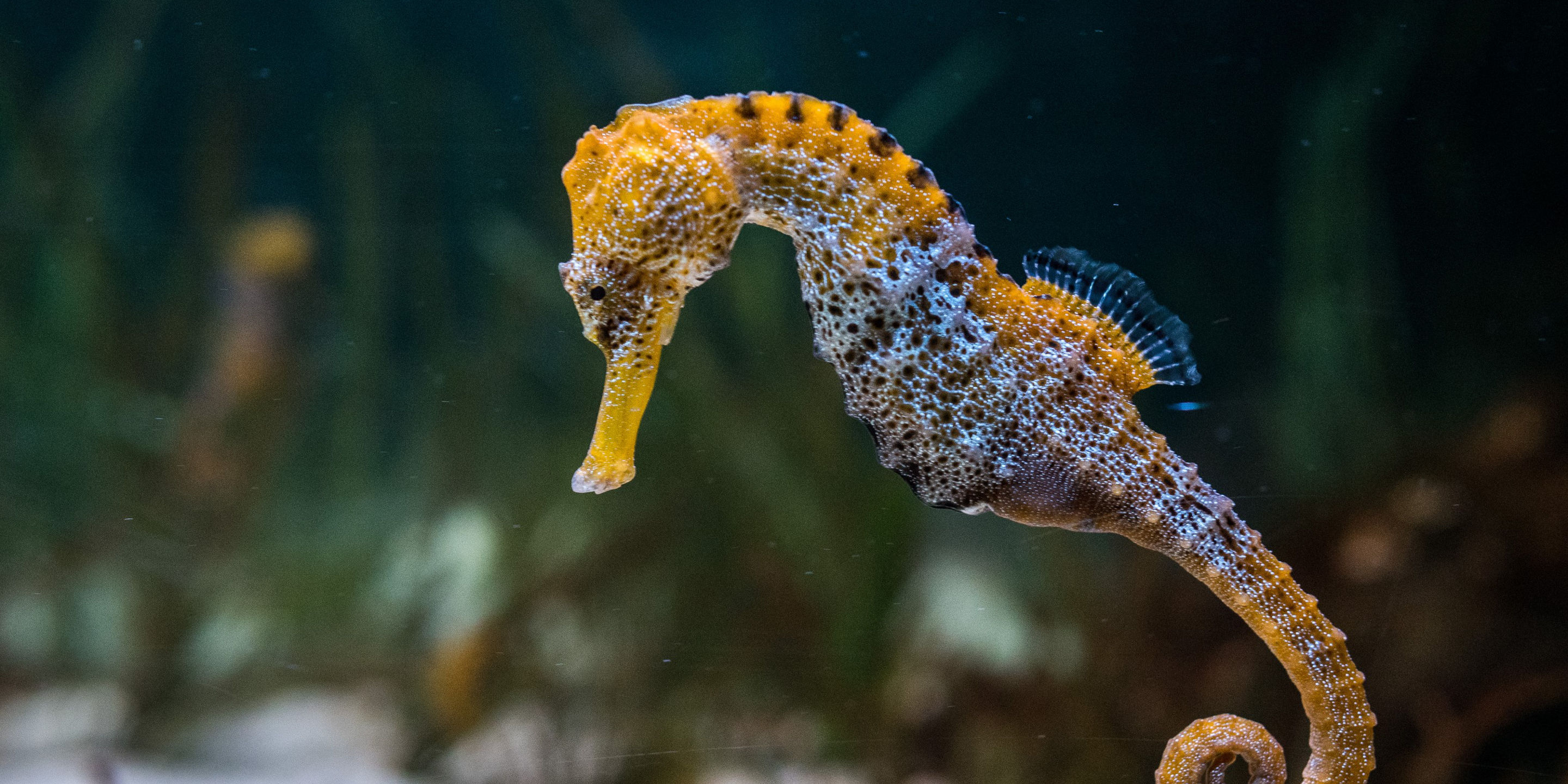


Seahorses have specialised skin cells, called chromatophores, that allow them to change colours and patterns to match their surroundings. After an elaborate courtship, female seahorses will deposit eggs into the male’s brood pouch for fertilisation. Following a gestation period of two to four weeks, males give birth to a large litter ranging from a few dozen to over a thousand juveniles.
Longsnout Seahorses are found in the seagrass meadows of shallow coastal waters. Seahorses are fish with a unique shape – their upright posture and small fins contribute to them being weak swimmers against currents.
Animal Type
Bony Fish
Range
Western Atlantic
Natural Habitat
Coastal Waters
Diet
Crustaceans, plankton
Conservation Status
Not Evaluated
Extinct
Near Threatened
Likely to become threatened in the near future
Find out more
Characteristics
Feeding behaviour
Longsnout Seahorses are ambush predators that remain nearly motionless while waiting for prey, rather than chasing them down. They lack teeth, but their elongated snouts and small mouths are perfectly adapted for feeding on tiny crustaceans. Using a pipette-like suction, they draw in live prey and swallow them whole in a swift motion.
Threats faced/Conservation
Longsnout Seahorses live in shallow coastal waters, relying on surrounding substrates for shelter and protection. This link to their environment makes them especially vulnerable to habitat loss and degradation caused by human activities along coastlines.
You May Also Like
Conservation Status
Not Evaluated
Species yet to be assessed
Data Deficient
Insufficient data for evaluation
Least Concern
At lower risk of extinction
Near Threatened
Likely to become threatened in the near future
Vulnerable
At high risk of extinction
Endangered
At very high risk of extinction
Critically Endangered
At extremely high risk of extinction
Extinct in the Wild
No longer found in the wild, survives only under human care
Extinct
No longer exists